
Originally published on September 14, 2025, updated on November 13, 2026.
When the first cold morning hits, bundling your child up feels like the obvious thing to do. Then you get to the car and wonder: can they actually wear that puffy coat in their car seat?
It's one of the most common car seat questions we hear every winter. The short answer is that bulky coats and snowsuits don't belong under the harness, but that doesn't mean your child has to be cold.
The good news? Warm and safe aren't opposites. In this article, you'll learn why puffy coats and car seats don't mix, a quick test to check your child's actual coat, and simple ways to keep babies, toddlers and big kids cozy on every cold-weather drive.
Winter Coats and Car Seats at a Glance
✔ Thin, warm layers go under the harness.
✔ Bulky coats, snowsuits and bunting bags stay out from under the straps.
✔ Tighten the harness until you can't pinch any slack at your child's collarbone.
✔ Chest clip at armpit level.
✔ Warm stuff goes over the straps, never under: a blanket, or their coat on backwards.
✔ Hats, mitts and warm socks or boots are all fine.
✔ Keep your child's face uncovered, and take extra layers off once the car warms up.
✔ Not sure about a coat? Do the puffy coat test once and you'll know.
Can My Child Wear a Winter Coat in Their Car Seat?
Not a bulky one. Canadian car seat guidance, including the Canadian Paediatric Society and Alberta Health Services, says bulky clothing like puffy winter coats and snowsuits should not be worn under a car seat harness.
A thin coat can be a different story. Some thin fleece jackets and lightweight coats fit close to the body and don't add much padding. The only way to know for your child's coat is to test it (more on that below).
Why Puffy Coats and Car Seats Don't Mix
Puffy coats feel snug. The straps aren't.
Winter coats and snowsuits keep kids warm by trapping air in thick padding. In a crash, that air squishes flat in an instant. The harness that felt tight when you buckled up is suddenly too loose, leaving a gap between your child and the straps.
A car seat harness works best when it sits close to your child's body. That gap means your child can move much further in the seat than the harness was designed to allow, which raises the risk of serious injury.
Bulky layers can also push the straps out of position, so the chest clip and harness don't sit where they should.
This is one of those things many caregivers simply haven't heard about. If your child has been riding in a puffy coat, you haven't failed them. You've just learned something new, and it's an easy fix.
The Puffy Coat Car Seat Test
This quick test tells you whether a specific coat is thin enough to wear under the harness. You only need to do it once per coat.
Part 1: Coat on
Buckle your child into their car seat with their winter coat on.
Tighten the harness until you can't pinch any slack in the strap at their collarbone.
Unbuckle and take the coat off. Don't touch the straps.
Don't loosen the straps between steps. That's the whole trick.
Part 2: Coat off
Buckle your child back in without the coat. Don't retighten.
Do the pinch test: try to pinch the strap at their collarbone between your thumb and finger.
Can't pinch any slack? The coat is thin enough to wear under the harness.
Can pinch slack? The coat is too puffy to wear under the straps. It comes off for the car ride and goes over the harness instead.
Once you know which coats pass, mornings get a lot easier.
What Is the Pinch Test?
The pinch test is how you check that a harness is snug, coat or no coat. Transport Canada and the Canadian Paediatric Society both describe it.
Once your child is buckled and the harness is tightened, try to pinch the strap at their collarbone between your thumb and finger. If you can pinch a fold of strap, it's too loose. Tighten until you can't.
Do this every ride. It takes two seconds, and it's especially worth a second look whenever the season (and the wardrobe) changes.
How to Keep Your Child Warm in the Car Seat Without a Bulky Coat
The simple rule: light layers under the straps, warm layers over the straps.
Under the harness
Thin, snug-fitting layers, like a long-sleeved top and leggings or a footed sleeper.
A thin fleece layer, if it passes the pinch test. Fleece keeps heat in without much bulk, but "fleece" doesn't automatically mean thin enough. Thickness and harness fit still matter.
Over the harness, after buckling
A blanket tucked over the buckled straps.
Their coat on backwards, with their arms through the sleeves. It works like a blanket that can't slide off, and toddlers and older kids often like it.
Hats, mitts and warm socks or boots. These keep kids warm without getting in the way of the harness.
Keep your child's face uncovered, and avoid draping anything over the whole seat in a way that blocks their airflow.
To and from the car
Your child can wear their puffy coat or snowsuit on the walk to the car. Take it off before buckling, then bring it along so it's ready when you arrive, and for any stops or unexpected delays.
A few practical extras
These aren't safety requirements, but some families find they make winter mornings easier:
Warm up the car first when you can. If the car is running in the driveway, make sure the tailpipe is clear of snow, and never leave your child alone in the vehicle.
Bring an infant seat inside. If your baby rides in an infant seat that clicks out of a base, keeping it indoors between trips means it isn't freezing cold when you buckle them in.
Keep a spare blanket in the car so you're never caught without one.
Winter Car Seat Tips by Age and Stage
Babies in an infant seat
Dress your baby in thin, snug-fitting layers, plus a hat, mitts and booties.
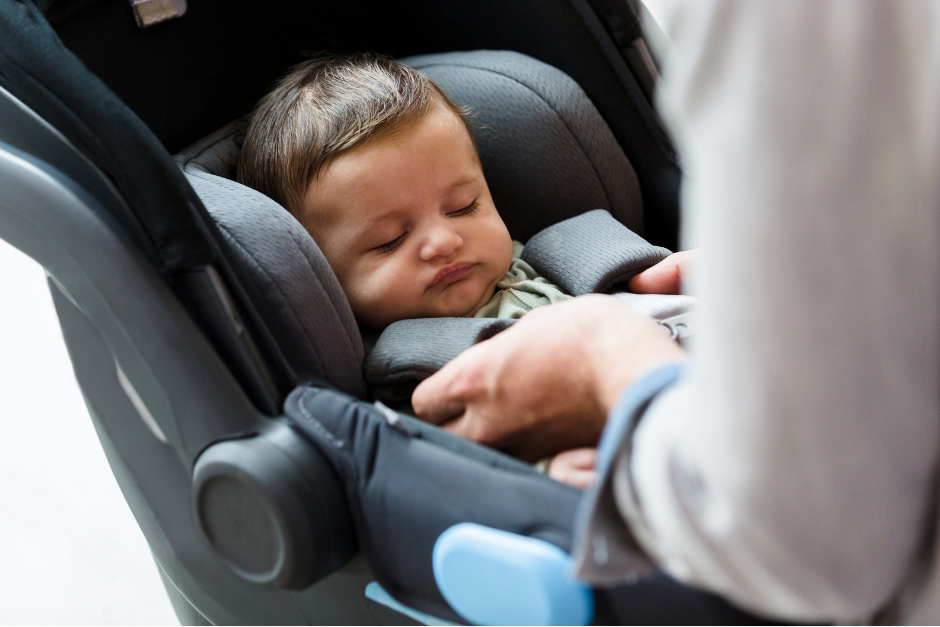
Buckle and tighten the harness, then add a blanket over the straps.
Some families use a cover that fits over the outside of the infant seat like a shower cap, with nothing behind your baby or under the straps. Some car seat makers still recommend taking this type of cover off while the seat is in the car, so check both the cover's and the car seat's manuals before using one.
Babies can overheat. Once the car warms up, take the blanket off or open the cover.
Toddlers and preschoolers in a rear- or forward-facing seat
Thin layers under the harness, then a blanket or their coat on backwards over the top.
Let them help. Choosing "their" car blanket or putting their own arms into a backwards coat can turn the routine into a game.
Once the car warms up, they can kick the blanket or coat off so they don't get too hot.
Big kids in a booster seat
Booster seats use the vehicle's seat belt instead of a harness, but bulky coats still get in the way.
Thin layers work best. Add a blanket on top, or unzip their coat so the lap belt stays low and snug across their hips, not up on their tummy.
The shoulder belt should sit across the middle of their chest and collarbone, away from their neck.
What About Snowsuits, Bunting Bags and Car Seat Coats?
Snowsuits and bunting bags
Snowsuits are a lot like puffy coats: they add padding that can compress in a crash. Bunting bags and padded liners that go behind your baby or under the straps can also change how the harness fits.
The Canadian Paediatric Society says add-on accessories that aren't approved by your car seat's manufacturer, such as a bunting bag, aren't safe to use. If something came in the box with your car seat, it was designed and tested for that seat.
Car seat covers, inserts and strap covers
Products sold separately to go with car seats, like padded liners, head supports and strap covers, aren't regulated the way car seats are. Transport Canada warns that some can add slack to the harness or stop the chest clip from sitting at armpit level.
The simplest rule: nothing goes behind your child or under the straps unless it came with your seat or your car seat's maker approves it. When in doubt, your car seat manual has the final say.
Coats and ponchos sold as "car seat friendly"
Some coats and ponchos are designed to work with car seats. Some pass the puffy coat test and some surprisingly don't, so test any coat the same way. A poncho or cover that goes over a fully buckled, snug harness works like a blanket. Anything that adds padding under the straps or behind your child doesn't.
You don't need to buy anything special. A regular blanket or your child's own coat on backwards works just as well.
While You're There: A Quick Winter Harness Check
Harness snug, with no slack to pinch at the collarbone.
Chest clip at armpit level.
Harness straps in the right slot: at or just below the shoulders for rear-facing, at or just above for forward-facing.
No thick inserts, liners or bunting bags that didn't come with your seat.
Want to go further? Our guide to 10 common car seat mistakes covers installation, tethers and expiry dates. If you're shopping for a new seat or wondering when to move to the next stage, start with how to choose the right car seat.
And if you'd like a second set of eyes, a certified child passenger safety technician can check your seat with you.
Common Questions About Winter Coats and Car Seats
Is a thin puffer jacket okay in a car seat?
It might be. Some thin, packable jackets pass the puffy coat test and some don't. Test it once and you'll know.
Can I just tighten the straps more over a puffy coat?
Pulling the harness tighter over a puffy coat doesn't solve the problem. The padding can still compress in a crash and leave the straps loose. Take the coat off and put it over the harness instead.
Is fleece okay in a car seat?
Thin fleece is often a great choice, and many Canadian sources recommend thin, warm layers like fleece. Thick, plush or sherpa-style fleece can be bulkier than it looks, so do the pinch test.
What about Halloween costumes or holiday outfits?
The same rule applies. If it's bulky or padded, it comes off for the ride. Our Halloween guide covers costumes in car seats.
How do I know if my child is too warm in the car?
Feel their chest or the back of their neck. Their skin should feel comfortably warm, not hot or sweaty. Cool hands alone don't always mean they need another layer.
Warm, Buckled and Ready to Go
You don't have to choose between keeping your child warm and keeping them safe in their car seat. Thin layers under the straps, a snug harness you can't pinch, and warmth on top covers almost every winter drive.
Do the puffy coat test once per coat, and those cold mornings get a lot simpler.
Share this with grandparents, babysitters, and anyone else who buckles your kids in this winter. You've got this.
Continue Learning
Continue building your family's safety toolkit with these resources from Bump + Baby Matters.
Infant & Child CPR + Choking Classes
Fall and Winter Safety: Common Questions About Babies and Toddlers
Winter Road Trip Ready: Packing the Car Safely and Efficiently for Families
10 Common Car Seat Mistakes (and How to Fix Them)
How to Choose the Right Car Seat: A Simple Guide for Parents
Have a question? We’re always happy to help. Send us a message on Instagram.