
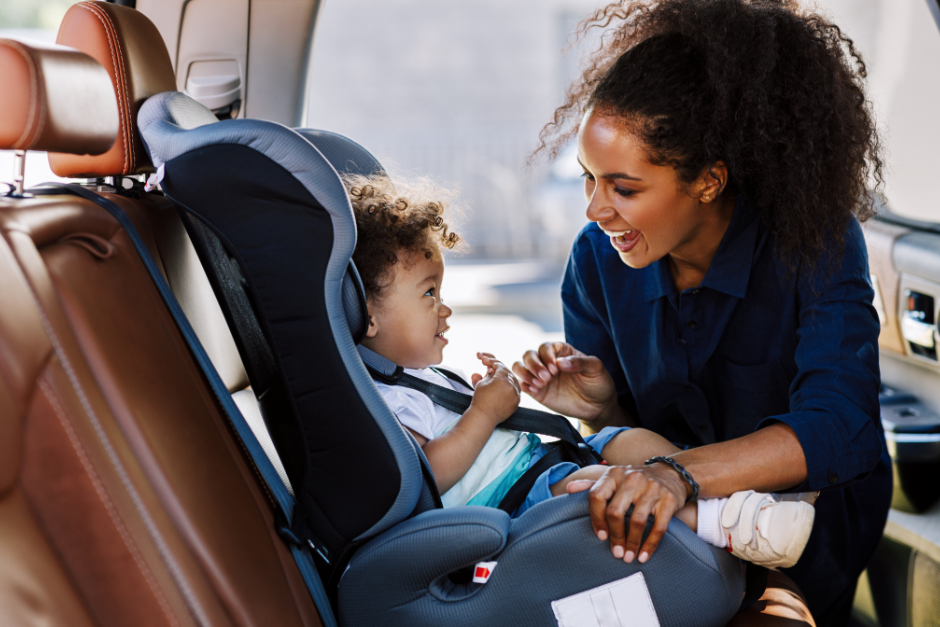
Choosing a car seat shouldn’t feel overwhelming—but it often does. Between rear-facing, convertible, and all-in-one, the options can blur together fast.
We’ve all been there: standing in a store aisle or scrolling online, staring at a wall of car seats all promising to be “the best.” So let’s make it simple.
Here are the main types of car seats, what they’re designed for, and what to consider when choosing the one that fits your family best.
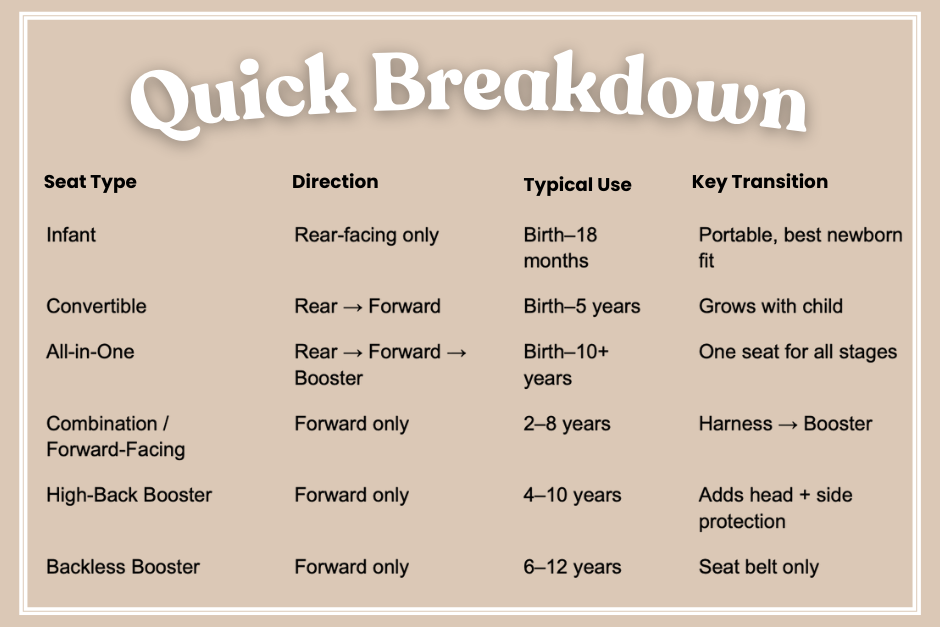
Infant Car Seat
Best for: Newborns and younger babies (birth to 12–18 months)
This is usually your baby’s first seat—the one you bring them home in. It’s rear-facing only and designed to cradle your baby safely and comfortably. Most come with a base that stays in your car so you can easily click the seat in and out for errands or naps on the go.
Why parents choose it
Convenient for quick transfers between home, car, and stroller
Provides excellent fit and support for newborns
Works well for families who share vehicles or use multiple bases
What to consider
Usually outgrown around the first birthday
You’ll need another seat after this stage
Tip: Always check your seat’s recline angle—newborns need that gentle tilt to keep their airway open and supported.
Convertible Car Seat
Best for: Parents who want one seat that lasts from infancy to preschool
Convertible seats start rear-facing, then turn forward-facing as your child grows. They stay installed in your car—ideal for families who prefer a long-term seat instead of one that moves in and out.
Why parents choose it
Lasts several years (often birth to 5 years)
Provides great long-term value
Meets all safety needs through early childhood
What to consider
Not portable or stroller-compatible
Some models may not recline deeply enough for smaller newborns
This is a great choice for families who want to keep things simple and focus on one seat that grows with their child.
All-in-One Car Seat
Best for: Families who want one seat from birth through big-kid years
All-in-one seats transition from rear-facing to forward-facing and eventually to a booster. They’re designed to cover every stage of car seat use.
Why parents choose it
One purchase for every stage
Cost-effective over time
No need to relearn installations later
What to consider
Bulkier and heavier than other models
May not fit smaller newborns as snugly
Even though it’s designed to last for years, it’s still important to check the fit regularly and adjust as your child grows.
Forward-Facing (Combination) Car Seat
Best for: Toddlers ready for a forward-facing harness (around 2–8 years)
Combination seats, sometimes called “harness-to-booster,” start with a five-point harness and later convert to a booster using your vehicle’s seat belt.
Why parents choose it
Allows extended harness use for growing toddlers
Provides an upright fit for older children
Smooth transition to booster stage
What to consider
Forward-facing only (no rear-facing option)
Can take up more space in smaller vehicles
If you’re switching from rear-facing, double-check your child’s height and weight. Keeping them rear-facing for as long as possible within the seat’s limits is safest.
High-Back Booster
Best for: Children who have outgrown their harnessed seat but still need support
High-back boosters position the seat belt properly across the chest and hips while offering additional head and side protection.
Why parents choose it
Encourages correct seat belt placement
Offers added comfort and structure
Great for vehicles without headrests
What to consider
Bulkier than backless boosters
May take up extra space in smaller cars
If your child still tends to fall asleep on car rides, a high-back booster helps keep them safely positioned while resting.
Backless Booster
Best for: Older, mature riders (around 6–12 years)
Backless boosters are lightweight, simple, and easy to move between vehicles—perfect for carpooling or travel.
Why parents choose it
Portable and affordable
Easy to use in different vehicles
What to consider
No head or side protection
Must be used in vehicles with headrests
Check that the seat belt lies low across the hips and the shoulder belt rests on the collarbone, not the neck or face.
Gentle Reminders
Every family’s needs are different—the right seat is the one that fits your child, your vehicle, and your lifestyle.
Installation and fit depend on both your child and your car. Always double-check with a certified car seat technician for guidance, or review your province’s official car seat safety guidelines for regional recommendations.
Want Product Suggestions?
Check out our handpicked collection of bath essentials!
→ Road Trip Ready | Car Safety Essentials For Families
Learn More & Connect
Have you entered our latest giveaway? Enter HERE!
Check out our Infant & Child CPR & Choking First Aid Class HERE!
Have questions? Message us on Instagram!