
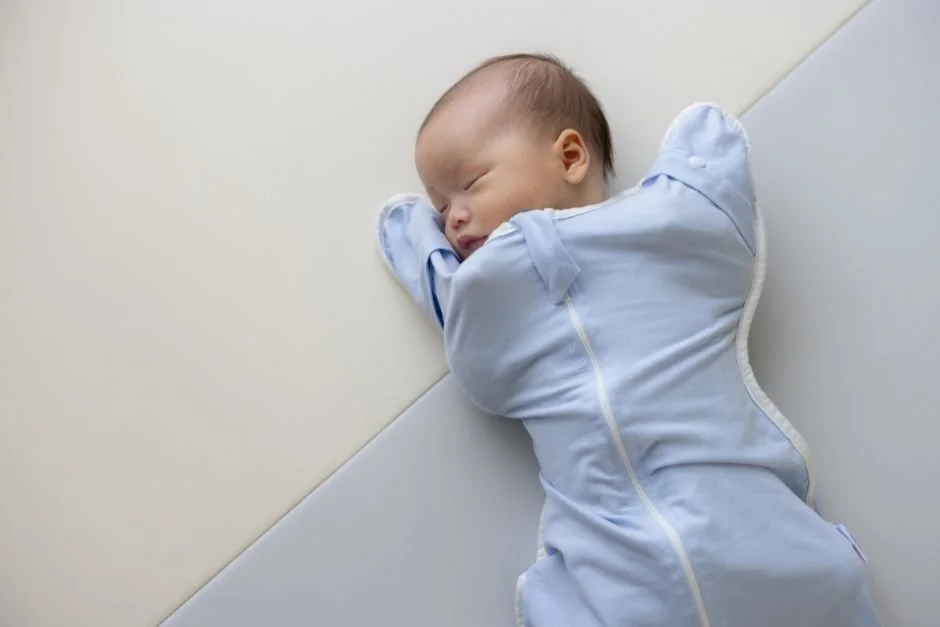
Wearable blankets can help keep babies warm and cozy while also supporting safe sleep — as long as we choose the right kind.
Let’s walk through the basics together so you can feel confident when picking one out.
Why Sleep Sacks Matter?
Health Canada recommends keeping baby’s sleep space free from loose items — that means no blankets, pillows, or stuffies in the crib or bassinet.
That’s where sleep sacks (also called wearable blankets) come in. They keep your baby warm without the risks that come with loose bedding — helping everyone sleep a little easier.
Are Sleep Sacks Safe?
Yes — when they fit properly and aren’t weighted. The safest sleep sacks are simple, well-fitted, and designed for your baby’s stage and sleep environment.
Here’s what to look for:
A snug fit at the neck and arms
The sack should be secure enough that baby can’t slip inside it, but roomy enough at the legs and hips for free movement.
No extra features
Avoid anything with added weight, padding, or accessories. Weighted sleepwear is not recommended by Health Canada due to suffocation risks.
A TOG rating that matches your home’s temperature
TOG refers to the warmth of the fabric. Here's a quick guide:
When to Use a Sleep Sack?
Newborns
Many babies start out in a swaddle, but you can use a fitted sleep sack from birth — especially if your baby doesn’t like being swaddled or once they start showing signs of rolling.
Rolling or unswaddled babies
Once baby can roll, swaddling is no longer safe. That’s your cue to switch to a sleep sack if you haven’t already.
Toddlers
Sleep sacks aren’t just for infants — many are designed for children up to age 2 or 3. They’re a great alternative to blankets, which often get kicked off during sleep.
What Materials Are Sleep Sacks Made Of?
Sleep sacks come in a range of materials — and what you choose can impact both comfort and safety. Look for fabrics that are breathable, non-toxic, and appropriate for the season.
Here are some common materials:
Cotton: A popular choice for its softness, breathability, and natural feel. Organic cotton is a great option for sensitive skin.
Bamboo or Viscose from Bamboo: Known for its temperature-regulating properties, bamboo blends are gentle on skin and naturally moisture-wicking.
Fleece or Microfleece: A warmer option typically used in cooler temperatures. While cozy, fleece can lead to overheating if the TOG rating is too high for your room temperature.
Muslin: Lightweight, airy, and breathable — ideal for warmer rooms or summer use.
Wool blends: Some premium sleep sacks use merino wool for its temperature regulation, though these tend to be more expensive.
📌 Safety Tip: Choose certified fabrics whenever possible (like OEKO-TEX® or GOTS-certified organic cotton), and always avoid synthetic or overly plush materials that trap heat or increase suffocation risk.
What Types of Sleep Sacks Are There?
Swaddle Sleep Sacks
Best for: Newborns (0–2 months) who aren’t rolling yet
Features: Wrap-style or winged sleep sacks that gently hold baby’s arms in place
Safety Tip: Stop using as soon as baby shows signs of rollingTransition Sleep Sacks
Best for: Babies transitioning out of the swaddle (around 2–4 months)
Features: May have detachable sleeves, winged arms, or gentle compression to ease the swaddle-to-sack switch
Safety Tip: Look for non-weighted styles only — avoid compression or weighted chest panelsClassic Sleep Sacks (Sleeveless)
Best for: Babies 3 months and up
Features: Roomy at the bottom, sleeveless, available in multiple TOG ratings and materials
Why Parents Love It: Versatile, safe, and grows with your babySleep Sacks with Legs
Best for: Mobile babies and toddlers who like more freedom (9–36 months)
Features: Legs instead of a pouch — allows standing and walking
Bonus: Great for toddlers who resist sleep sacks or try to climb
Safety Tip: Make sure feet aren’t slippery on hardwood or stairsWearable Blankets with Sleeves or Hoods
Best for: Not recommended
Why to Avoid: Hoods and overly padded arms increase risk of overheating or suffocation
Stick with: Sleeveless, fitted-around-the-neck styles that allow for natural temperature regulation
What Are TOG Ratings?
Room Temperature → Suggested TOG → What Baby Might Wear Underneath
23–27°C → 0.5 TOG → Diaper or lightweight onesie
21–23°C → 1.0 TOG → Light sleeper or footed PJs
16–20°C → 2.5 TOG → Sleeper + bodysuit or heavier PJs
To check if your baby is too warm or too cold, feel their chest or back — hands and feet often feel cooler and aren’t a reliable indicator.
How Many Do You Need?
Most families find that 2 to 3 sleep sacks is the sweet spot:
One in use
One in the wash
One backup (for the inevitable blowout or late-night leak)
If your home runs warmer in the summer and cooler in the winter, consider keeping different TOG options on hand.
Sleep sacks can be a simple, safe part of your little one’s bedtime routine — but they’re only helpful when they’re used correctly. That means skipping the weighted ones, choosing the right size, and matching the fabric warmth to your home’s environment.
Safe sleep doesn’t need to be complicated. Simple, snug, and supported by your presence — that’s what matters most.
Want Product Suggestions?
Check out our handpicked collection of safe sleep essentials for families!
→ Safe Sleep Essentials: Bassinets, Monitors & More
Learn More & Connect
Have you entered our latest giveaway? Enter HERE!
Check out our Infant & Child CPR & Choking First Aid Class HERE!
Have questions? Message us on Instagram!