
Originally published on May 10, 2026. Updated on July 17, 2026.
Starting solids is an exciting milestone.
It also comes with a lot of questions.
For many parents, introducing common allergens like peanuts, eggs, or dairy can feel like one of the most intimidating parts of feeding their baby.
You might wonder:
What if my baby has an allergic reaction?
Should I wait until they're older?
Is there a "best" allergen to introduce first?
How will I know if something is wrong?
If you've had these thoughts, you're not alone.
The good news is that our understanding of food allergies has changed significantly over the last several years. Thanks to high-quality research and updated Canadian guidance, we now have clear recommendations that help parents introduce allergenic foods safely and confidently.
Remember, the goal isn't to rush through a checklist of foods. It's to gradually help your baby explore a wide variety of foods, including common allergens, in a way that feels calm, positive, and developmentally appropriate.
Let's walk through it together.
Why Has Advice About Allergens Changed?
If you've received advice from parents, grandparents, or even older parenting books, you may hear that allergenic foods should be delayed until after the first birthday, or even later.
That used to be the recommendation.
Today, we know much more.
Research has shown that delaying the introduction of common allergenic foods does not help prevent food allergies. In fact, for some children, introducing certain allergens earlier and continuing to offer them regularly may actually reduce the chance of developing an allergy.
Because of this, Canadian experts now recommend introducing common allergenic foods around 6 months of age, but not before 4 months, once your baby is developmentally ready to begin eating solid foods.
This recommendation applies to most babies, including many who have eczema or a family history of allergies. If your child has severe eczema, an existing food allergy, or another medical condition that may increase their risk, your healthcare provider or allergist may recommend a personalized introduction plan.
What Is a Food Allergy?
A food allergy happens when the body's immune system mistakenly identifies a food as harmful and reacts to it.
This reaction can happen within minutes, although it may occasionally take longer.
Most reactions are mild.
Some, however, can become serious and require immediate medical attention.
It's also important to remember that the first time a baby tries a food, they are much more likely to tolerate it than react to it. While it's natural to feel nervous, the vast majority of babies introduce common allergens without experiencing a food allergy.
Understanding what to watch for, and knowing what to do if a reaction occurs, can help make this milestone feel much more manageable.
Food Allergy vs. Food Intolerance: What's the Difference?
These terms are often used interchangeably, but they are not the same.
A food allergy involves the immune system and has the potential to cause reactions ranging from mild hives to anaphylaxis.
A food intolerance does not involve the immune system. It may cause digestive symptoms such as gas, bloating, or diarrhea, but it does not cause an allergic reaction.
Knowing the difference can help parents better understand why healthcare providers take suspected food allergies so seriously while managing intolerances differently.
Who Is Considered at Higher Risk for Food Allergies?
While every baby should be introduced to common allergens once they are developmentally ready for solids, some babies have a higher chance of developing food allergies.
Your baby may be at higher risk if they have:
Moderate to severe eczema, especially if it began early in infancy.
An existing food allergy.
A sibling or parent with food allergies (this alone doesn't necessarily change the timing of introduction, but it's helpful information to share with your healthcare provider).
If your baby has severe eczema or an existing food allergy, speak with your healthcare provider or an allergist before introducing highly allergenic foods. They may recommend introducing certain foods under medical supervision or developing a personalized plan based on your baby's health history.
For most babies, however, there is no benefit to delaying allergenic foods, even if allergies run in the family.
Canada's Priority Food Allergens
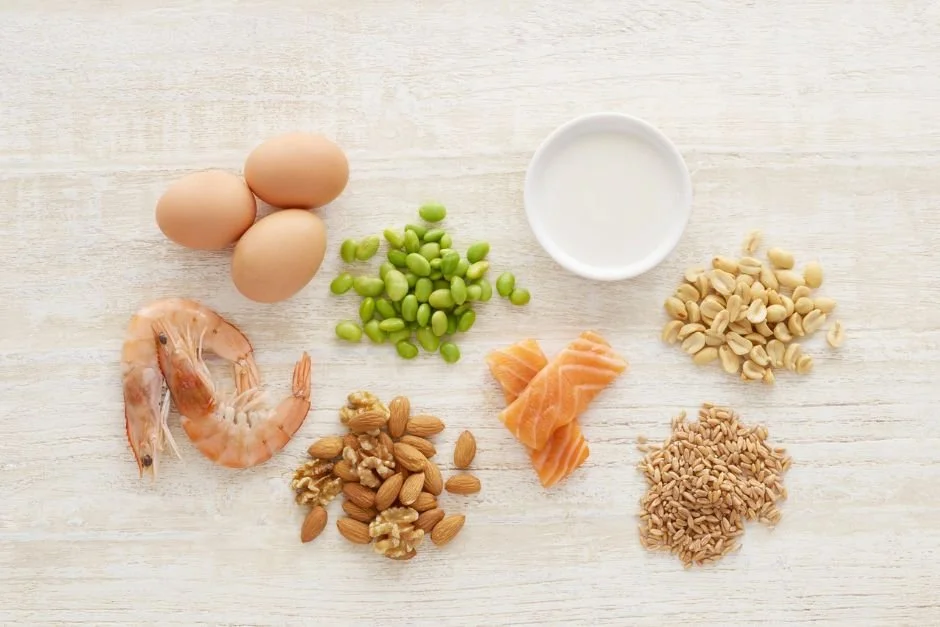
Health Canada identifies the following as priority food allergens in Canada:
Peanuts
Tree nuts (such as almonds, cashews, walnuts and pistachios)
Eggs
Cow's milk
Soy
Wheat and triticale
Sesame
Fish
Crustaceans and molluscs, commonly referred to as shellfish
Mustard
Sulphites are also grouped with Canada’s priority allergens because they can cause allergic-type reactions, although they do not cause a true food allergy.
You don't need to introduce these in any particular order.
Many families naturally start with foods like well-cooked egg, smooth peanut butter thinned into oatmeal or yogurt, or plain yogurt before moving on to other allergens over the coming weeks.
The goal is simply to introduce these foods gradually over time while continuing to offer a wide variety of other nutritious foods.
Is My Baby Ready to Start Allergens?
Introducing allergens follows the same readiness cues as introducing any solid food.
Rather than focusing on your baby's age alone, look for signs that they are developmentally ready.
Your baby is generally ready when they can:
✔ Sit with minimal support.
✔ Hold their head steady.
✔ Show interest in food.
✔ Bring objects to their mouth.
✔ Open their mouth when food is offered.
✔ Move food from the front of their mouth toward the back to swallow instead of automatically pushing it back out with their tongue.
If you're unsure whether your baby is ready for solids, our Is My Baby Ready for Solids? guide walks through these developmental milestones in more detail.
How to Introduce Allergens Safely
Introducing allergens doesn't need to be stressful.
Keeping the experience simple helps both you and your baby.
Here's an approach many families find helpful.
Choose a time when your baby is well.
Avoid introducing a new allergen if your baby:
has a fever
has a stomach bug
is unusually tired
has another illness
has recently received vaccines and isn't feeling like themselves
If your baby becomes unwell shortly after trying a new food, it can be difficult to know whether their symptoms are related to the food or to the illness itself.
Waiting until they are healthy makes things much clearer.
Introduce one new allergenic food at a time.
Offering one new allergenic food every day or two allows you to identify which food caused a reaction if one occurs.
Your baby can absolutely continue eating foods they have already tolerated while you're introducing new allergens.
For example:
Monday:
Oatmeal
Apple
Smooth peanut butter
Tuesday:
Oatmeal
Apple
Peanut butter again
Wednesday:
Oatmeal
Apple
Scrambled egg
There's no need to stop offering previously tolerated allergens while introducing a new one.
Start with a small amount.
Parents often ask,
"How small is small?"
Think one or two baby-sized tastes, not a full serving.
Examples include:
A thin smear of smooth peanut butter mixed into oatmeal or yogurt.
One or two small bites of well-cooked scrambled egg.
A spoonful of plain yogurt.
A small amount of hummus containing sesame.
If your baby tolerates those first tastes, you can gradually offer more during the meal.
Stay with your baby while they eat.
This isn't because you should expect something to happen.
It's simply good practice whenever babies are learning to eat.
Watch your baby as they explore the new food, and enjoy the experience together.
Most babies will happily continue eating without any problems.
How Long Should I Watch My Baby?
Allergic reactions often happen fairly quickly, although anaphylaxis can occur within minutes or up to two hours after exposure.
That doesn't mean sitting anxiously and staring at your child.
Instead, simply stay together, continue your normal activities, and be aware of how they're doing.
Remember, most babies tolerate new foods very well.
Should I Introduce Allergens in the Morning?
Many parents prefer introducing new allergens earlier in the day.
Doing so means healthcare providers are readily available if you have questions and allows you to observe your baby while they're awake rather than close to bedtime.
This isn't an official requirement, it can simply help many parents feel more comfortable.
Choose a time when both you and your baby are relaxed rather than trying to squeeze a new food into an already busy day.
What Does "Offer Allergens Regularly" Mean?
One of the biggest changes in feeding recommendations isn't just introducing allergens earlier.
It's continuing to include them.
Once your baby has safely tolerated a food, try to keep it as part of their regular diet whenever practical.
That doesn't mean every day.
It also doesn't mean every meal.
For many families, offering tolerated allergens a few times each week naturally as part of family meals is both realistic and consistent with current recommendations.
Think of allergens as becoming another normal food on your family's menu rather than a special "test" that only happens once.
What Does an Allergic Reaction Look Like?
Most babies will tolerate new foods without any problems. Still, knowing what an allergic reaction can look like helps you feel prepared.
Mild allergic reactions may include:
A few hives or raised, itchy bumps on the skin
Redness around the mouth or face
Mild swelling of the lips or eyes
Vomiting shortly after eating
A severe allergic reaction (anaphylaxis) is a medical emergency and may include:
Difficulty breathing or noisy breathing
Wheezing or persistent coughing
Swelling of the tongue or throat
Difficulty swallowing or speaking (in older children)
Pale, floppy, or unusually sleepy behaviour
Loss of consciousness
While severe reactions are uncommon, it's important to recognize the signs and act quickly if they occur.
What Should I Do If My Baby Has a Reaction?
If your baby has a mild reaction:
Stop offering the food.
Stay with your baby and monitor them closely.
Contact your healthcare provider or your provincial health advice line (such as 811) for guidance.
Do not offer that food again until you've spoken with a healthcare professional.
If your baby has signs of a severe allergic reaction:
Call 911 immediately.
If your child has been prescribed an epinephrine auto-injector, give it right away as directed.
Even if your baby begins to improve after epinephrine, they still need immediate medical assessment.
Common Questions Parents Ask
What if my baby refuses the food?
That's completely normal.
Many babies need multiple opportunities to become comfortable with a new taste or texture. A refusal doesn't mean they dislike it or are allergic to it.
Try again another day without pressure.
What if the food gets on my baby's skin?
Some babies develop temporary redness around the mouth from acidic or messy foods.
This isn't necessarily an allergy.
However, if you notice hives, swelling, or symptoms beyond mild skin irritation, stop offering the food and contact your healthcare provider.
Can I introduce more than one allergen in the same week?
Yes.
You don't need to wait an entire week between new allergens.
Introducing one new allergenic food every day or two allows you to identify which food caused a reaction if one occurs while still making steady progress through a variety of foods.
What if we don't normally eat certain foods?
Your family doesn't have to completely change the way you eat.
Focus on introducing a variety of common allergenic foods in ways that fit naturally into your meals.
For example, if your family rarely eats shellfish, discuss practical options with your healthcare provider rather than feeling pressured to purchase foods you wouldn't otherwise eat.
Can I introduce allergens using baby-led weaning?
Absolutely.
Whether you're spoon-feeding, using baby-led weaning, or combining both approaches, the recommendations for allergen introduction remain the same.
The most important consideration is preparing foods in a texture that matches your baby's developmental abilities and minimizes choking risk.
Key Takeaways
✔ Current Canadian guidance recommends introducing common allergenic foods around 6 months of age, once your baby is developmentally ready for solids (but not before 4 months).
✔ Delaying allergenic foods does not help prevent food allergies.
✔ Introduce one new allergenic food at a time.
✔ Begin with a small amount and stay with your baby while they eat.
✔ Once tolerated, continue offering allergenic foods regularly as part of your family's normal meals.
✔ Most babies introduce allergens without experiencing an allergic reaction.
✔ Knowing what to watch for can help you feel confident, not fearful, as you introduce new foods.
Continue Learning
Continue building your family's safety toolkit with these trusted resources from Bump + Baby Matters.
Infant & Child CPR & Choking Classes
Mouth Mapping: How Babies Learn to Manage Food When Starting Solids
Is My Baby Ready for Solids? Readiness Signs, First Foods, and Safe Starting Tips
How to Safely Serve Grapes, Oranges & Strawberries by Age and Stage
Have a question? We're always happy to help. Send us a message on Instagram.