
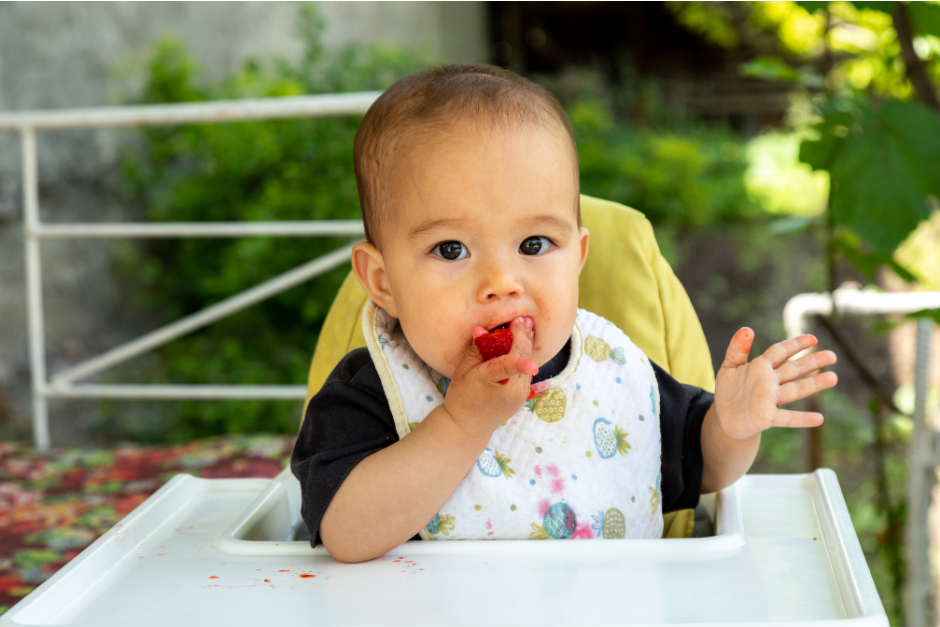
Summer snacks can be some of the easiest foods to reach for.
Fresh fruit is quick to prepare, easy to pack, and often a favourite with our kids.
But some common fruits, including grapes, oranges, and strawberries, can be harder for babies and young children to manage depending on their size, shape, firmness, and how they are served.
That does not make them “bad” foods, and it does not mean we need to avoid them.
We may simply need to prepare them differently as our kids grow.
Why These Fruits Can Be Tricky
Each of these fruits has something different to consider:
Grapes: Their round, smooth shape can completely block a young child’s airway if they are served whole.
Oranges: The slippery fruit and tougher membranes can be challenging for an early eater to control and break down.
Strawberries: Their size and firmness can vary. Smaller, firmer strawberries may be difficult to manage, while very ripe strawberries are softer but can still be slippery.
Children younger than four are more likely to choke on food because they are still learning to chew thoroughly, may not yet have all of their molars, and have smaller airways. Alberta Health Services recommends changing the texture, size, or shape of foods to make them easier for young children to manage.
This is not about taking foods away.
It is about matching how we serve them to our child’s age, eating skills, and stage of development.
A Simple Way to Think About Food Preparation
When deciding how to serve fruit, consider:
Texture: Is it soft enough to mash or squish easily?
Shape: Is it round or smooth enough to block a small airway?
Size: Can our child comfortably control the piece in their mouth?
Tough parts: Are there seeds, pits, peels, or membranes that need to be removed?
Eating skills: Is our child beginning solids, learning to pick up small pieces, or consistently chewing before swallowing?
Health Canada recommends offering a variety of soft textures from around six months while avoiding hard, small, round, smooth, or sticky foods that may cause choking.
Same fruit. Different preparation.
Grapes
Whole grapes are a well-recognized choking hazard because their round, smooth shape can fit closely within a young child’s airway. The Canadian Paediatric Society recommends slicing round foods such as grapes lengthwise.
Around 6 Months: Beginning Solid Foods
Serve: Mashed, finely chopped, or quartered lengthwise and lightly flattened
Try: Mixing mashed or finely chopped grapes into plain yogurt, oatmeal, or another soft food
Never offer a whole grape.
To quarter a grape, cut it lengthwise from top to bottom and then cut each half lengthwise again. Very firm grapes can also be lightly squashed after cutting.
Around 9 to 12 Months: Learning to Manage Chopped Foods
Serve: Quartered lengthwise
By around 8 to 12 months, many babies begin developing the ability to pick up and chew chopped foods. HealthLink BC recommends cutting grapes into quarters and includes quartered grapes as an example for babies in this stage.
Continue adjusting the pieces if your baby is having difficulty picking them up or managing the skin.
12 Months to Under 4 Years
Serve: Quartered lengthwise
Even when chewing skills are improving, whole grapes are still round, firm, and slippery.
Continue cutting them into quarters rather than simply cutting them in half. A halved grape can still retain a rounded shape.
4+ Years
Serve: Whole only when eating skills are well established, or continue quartering
Age four is not an automatic switch. Some children may be ready to manage whole grapes, while others may benefit from having them cut for longer.
There is absolutely nothing wrong with continuing to quarter grapes.
Oranges
Oranges are not round and firm like grapes, but their slippery flesh, seeds, and tough membranes can make them challenging for some early eaters.
Around 6 Months: Beginning Solid Foods
Serve: Soft orange flesh with the peel, seeds, and tough membrane removed
Try: Mashed orange flesh or a soft piece that your baby can comfortably manage
HealthLink BC includes orange wedges with the membrane removed as an option for babies between 6 and 9 months.
Remove any seeds carefully and check that the remaining fruit is soft before serving.
Around 9 to 12 Months: Learning to Manage Chopped Foods
Serve: Soft orange flesh chopped into small pieces
As a baby’s grasp develops, small pieces of soft fruit may become easier to pick up independently.
Continue removing seeds and any especially thick or tough membrane.
12 Months to Under 4 Years
Serve: Orange segments cut into manageable, bite-sized pieces
Some toddlers may manage regular segments well, while others may continue to struggle with the membrane or take very large bites.
Cutting each segment into smaller pieces can make the fruit easier to control.
4+ Years
Serve: Regular segments when ready
Continue removing seeds and stay aware of how your child is chewing and managing the fruit.
If they tend to take very large bites or swallow before chewing thoroughly, smaller pieces may still be the better fit.
Strawberries
Strawberries are generally softer than grapes, but their size, ripeness, and firmness can vary significantly.
A very ripe strawberry may squish easily, while a small or underripe strawberry may be quite firm.
Around 6 Months: Beginning Solid Foods
Serve: Mashed or as a large piece of very ripe, soft strawberry that can be easily squished
Try: Mashed into plain yogurt, oatmeal, or another soft food
HealthLink BC includes mashed strawberries in its sample menu for babies between 6 and 9 months.
Avoid offering small, firm, round chunks that could be difficult for an early eater to manage.
Around 9 to 12 Months: Learning to Manage Chopped Foods
Serve: Sliced or chopped soft strawberry
Choose ripe berries and adjust the size based on your baby’s grasp and chewing skills.
Large strawberries can be cut lengthwise into quarters. Smaller berries can be chopped into soft, manageable pieces rather than served whole.
12 Months to Under 4 Years
Serve: Sliced, quartered, or chopped
Strawberries are soft, but they can be slippery and easy to bite into in large pieces.
Continue cutting small or firm strawberries, particularly if your child tends to overfill their mouth.
4+ Years
Serve: Whole when ripe and eating skills are well established, or halved for extra caution
A child who consistently takes manageable bites and chews thoroughly may be ready for a whole strawberry.
Halving or slicing them remains a simple option, especially when the berries are small or firm.
Age Is Only One Part of Readiness
Age ranges can give us a helpful starting point, but children do not all develop eating skills according to the same schedule.
We also want to consider whether our child can:
Sit upright with steady head control
Pick up and control the food being offered
Bite and chew the texture
Move food around their mouth
Swallow comfortably
Take manageable bites rather than filling their mouth
If a piece does not feel like the right fit yet, we can make it softer, smaller, or easier to manage.
Safer Eating Is About More Than Cutting the Food
How and where children eat matters too.
Babies and young children should be seated upright and actively supervised during meals and snacks. They should not be walking, running, playing, or lying down while eating.
Health Canada also advises against feeding young children in a moving vehicle. If choking happens, it can be difficult for a driver to notice, pull over safely, and respond quickly.
That means saving those convenient car snacks for when the vehicle is safely parked.
Gagging and Choking Are Not the Same
Gagging is a protective reflex that helps move food forward when it feels too large, unfamiliar, or too far back in the mouth. It is common when babies and young children are learning to eat solid foods.
Choking happens when food blocks the flow of air. It can be life-threatening and requires immediate action.
Alberta Health Services offers a helpful overview of the difference between gagging and choking, along with food-preparation guidance for children under four.
What We’re Really Doing Here
We are not changing what our kids eat. We are adjusting how we serve it.
Small changes like:
Cutting round foods lengthwise
Softening or mashing firm foods
Removing seeds and tougher membranes
Adjusting the size as eating skills develop
Keeping children seated and supervised
can make everyday snacks easier and safer to manage.
A Gentle Reminder
Every child develops at their own pace.
These age ranges are guides, not deadlines. A child’s chewing and swallowing abilities, feeding history, and individual development matter too.
If you have questions about your child’s eating skills, speak with their healthcare provider or a registered dietitian for individualized guidance.
You’re Already Doing So Much
Snack time, packed lunches, park snacks, and quick bites between activities can involve a lot of little decisions.
These tips are not about preparing every bite “perfectly.”
They are here to help you recognize the shapes and textures that can be more difficult for young children and make informed choices that work for your family. You’ve got this!
Continue Learning
Continue building your family’s safety toolkit with these trusted resources from Bump + Baby Matters.
Infant & Child CPR + Choking Classes
Infant Choking First Aid: The 5 + 5 Rule Explained
Mouth Mapping: How Babies Learn to Manage Food When Starting Solids
Why Predictable Snack Times Support Safer Eating for Babies & Toddlers
What Toddlers Actually Eat: Easy Daycare Lunch Ideas That Work
Have a question? We're always happy to help. Send us a message on Instagram.