
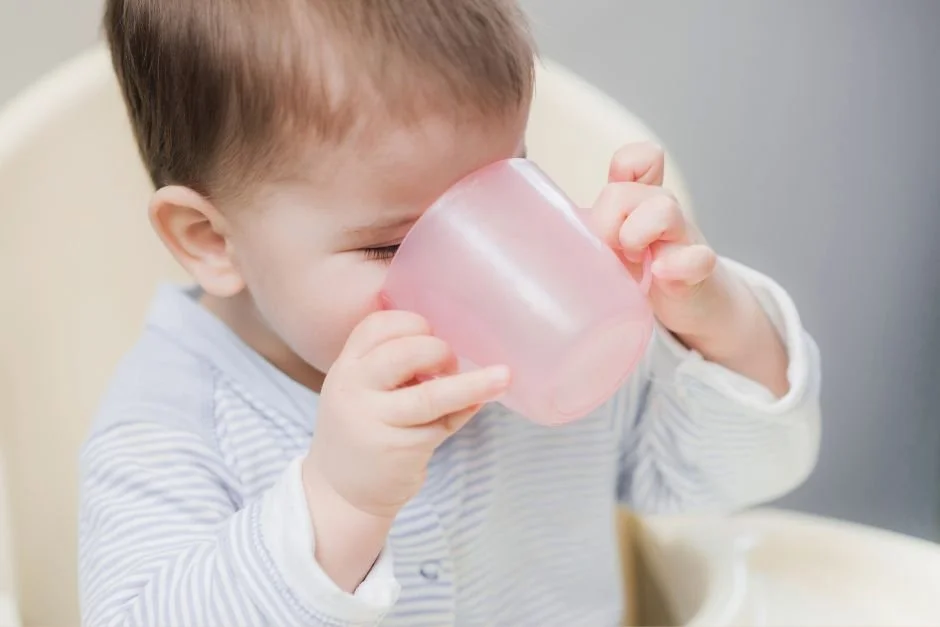
Learning to drink from a cup can look like one part developmental milestone and three parts laundry.
There may be a soggy bib, a puddle on the high-chair tray, and a very proud baby who has just discovered what happens when they turn a cup upside down.
It can be messy, but it is also meaningful.
Cup drinking is a skill that develops gradually, much like learning to use a spoon or take those first wobbly steps. We are not expecting our babies to understand it immediately. We are simply giving them safe, supported opportunities to practise.
Most babies can begin exploring a cup at around six months, once they can sit upright with good head and neck control and are beginning complementary foods. Human milk or infant formula will still provide most of their nutrition and hydration during the first year. The cup is practice, not a replacement for their usual milk feeds.
Let’s walk through when to begin, which cups can be helpful, and how we can make learning feel manageable for everyone.
The Quick Guide to Cup Drinking
For those days when we need the highlights:
✔ Begin offering a cup at around six months when your baby can sit upright and hold their head steady.
✔ Start with a small open cup. A straw cup can also be introduced as your child’s skills develop.
✔ Add only a small amount of water at first. One teaspoon, or about 5 mL, is enough for early practice.
✔ Keep your child seated upright and well supported.
✔ Hold the cup with them and tilt it slowly. We want to offer a sip, not pour liquid into their mouth.
✔ Expect spills. They are part of learning, not a sign that your child is not ready.
✔ Continue human milk or infant formula as your baby’s main source of nutrition and hydration throughout the first year.
✔ Begin moving from bottles to cups during the second year. The Canadian Paediatric Society recommends switching to a regular cup for all drinks between 12 and 15 months, although some children need a more gradual transition.
Why Learning to Drink from a Cup Matters
Drinking from a cup is a developmental skill.
It gives babies and toddlers opportunities to practise:
Sitting steadily while eating and drinking
Bringing an object to their mouth
Holding and tipping a cup
Closing their lips around a cup rim or straw
Taking a manageable sip
Coordinating breathing and swallowing
Becoming more independent at mealtimes
Alberta Health Services describes cup drinking as a skill that develops in steps. Babies commonly begin working on holding a cup, closing their lips around the rim, keeping their jaw steady, and taking small sips between six and nine months.
Cup practice can also support the eventual transition away from bottles.
This does not mean bottles are “bad.” Bottles provide comfort, nutrition, and connection for many babies. The concern is prolonged bottle use, particularly when a child carries a bottle or no-spill cup containing milk, juice, or another sugary drink throughout the day or takes it to bed.
Frequent exposure to these drinks can increase the risk of tooth decay. Moving toward cups and offering water between regular meals and snacks can help protect growing teeth.
When Can Babies Start Drinking from a Cup?
Most babies can begin exploring a cup at around six months.
Before beginning, look for these signs:
Your baby can sit upright in a supportive seat.
They have steady head and neck control.
They are alert and comfortable.
They are beginning complementary foods.
They can bring toys or other objects toward their mouth.
Your baby does not need to sit completely independently on the floor before trying a cup. They do need enough support to stay upright without slumping, leaning far to one side, or tipping their head backward.
Babies who were born prematurely or who have cardiac, respiratory, neurological, developmental, feeding, or swallowing concerns may need individualized guidance from their healthcare or feeding team.
Cup Drinking by Age and Stage
These ages are a guide, not a schedule your child must follow.
Some children will become interested in cups quickly. Others will need more time, help, and repetition.
Around 6 to 9 Months
At this stage, babies are beginning to understand what a cup is and what they can do with it.
Try:
A small open cup that holds approximately 30 to 60 mL
About one teaspoon of water at a time
Holding the bottom of the cup together
Letting your baby touch, hold, and explore an empty cup
Modelling how you take a sip from your own cup
Your baby may lick the rim, bite it, push it away, spill the water, or turn the cup upside down.
All of this gives them information.
Around 10 to 12 Months
Many babies are beginning to lift a cup toward their mouth, although they may still need help controlling the tilt.
At this stage, you can try:
A small open cup with handles
A cup with a narrow opening
A short, wide straw
Pausing between sips
Allowing your baby to take more control while you steady the cup
Babies sometimes take a larger sip than they can comfortably manage. They may let the water spill from their mouth or cough once as they recover. Slowing the tilt and offering less liquid can help.
Around 13 to 18 Months
Toddlers are often gaining more control over the size of their sips.
They may be able to:
Hold and tip a cup with less help
Close their lips more consistently around the rim or straw
Take several sips before pausing
Drink from a slightly wider cup
Use a cup for most of their drinks while seated
There will probably still be spills, especially when they are tired, distracted, excited, or experimenting.
Around 18 to 24 Months
Many children can now drink independently from an open or straw cup with less spilling.
At this stage, they can begin practising with:
Small family-style cups
Regular straws
Cups without handles
A wider cup opening
They may still need reminders to sit while drinking and place the cup back on the table when they are finished.
Which Type of Cup Is Best?
There is no single cup that works for every baby, every caregiver, and every situation.
For learning, a small open cup is an excellent place to begin. Straw cups can also be useful, especially as children become more independent or when families need a more portable option.
Open Cups
An open cup allows a child to practise taking a sip directly from the rim.
Look for:
A small size that fits your baby’s hands and mouth
A narrow rim or opening
A light cup that is easy to lift
Optional handles for extra support
A stable base
A tiny cup does not need to be filled. Adding one teaspoon of water gives your baby enough to practise without creating an entire high-chair waterfall.
An open cup can release liquid quickly if it is tipped too far. Hold the cup with your baby, tilt it slowly, and pause after each sip.
Straw Cups
Straw cups can be introduced alongside open-cup practice.
Look for:
A short straw
A straw that is not pushed deeply into the mouth
A flow your child can manage
Simple parts that can be fully taken apart and cleaned
A cup that does not require extremely forceful suction
Bring the straw to your child’s lips and give them time to close their lips around it. We do not need to push the straw into their mouth or squeeze liquid into them.
Some babies understand a straw quickly. Others chew it, play with it, or need many demonstrations before taking a sip.
Weighted Straw Cups
A weighted straw stays in the liquid even when the cup is tilted. This can make drinking easier in different positions and may be convenient for travel.
It is an option, not a required developmental step.
Choose one that can be taken apart completely, and inspect the straw and valve regularly for trapped residue or damage.
360 Cups and No-Spill Cups
A 360 cup allows a child to drink from around the edge while a valve helps control spills.
These cups can be helpful in the stroller, car, diaper bag, or living room. However, many 360 and no-spill cups require the child to suck against a valve rather than take a more typical sip from an open rim.
Health Canada and Alberta Health Services note that valved no-spill cups use a sucking pattern similar to bottle drinking and do not offer the same cup-drinking practice as an open cup.
That does not mean you need to throw away a cup that works for your family.
You can simply offer open-cup or straw-cup practice at meals while continuing to use a no-spill option when convenience matters.
Hard-Spout Sippy Cups
Hard-spout cups are not a milestone children must master before using another cup.
They can be a temporary transition tool, particularly for a child who strongly prefers a bottle. However, a valved spout still requires sucking, so it is helpful to offer an open or straw cup alongside it.
The goal is not to find one perfect cup. It is to give your child opportunities to build a range of drinking skills.
How to Teach Your Baby to Drink from an Open Cup
Step 1: Set Up a Stable Seat
Seat your baby upright in a supportive high chair or feeding seat.
Their head should be centred rather than tipped backward, and their body should not be slumping to one side.
Step 2: Start With a Tiny Amount
Add approximately one teaspoon, or 5 mL, of water.
A small amount is easier for your baby to control and easier for us to clean up.
Step 3: Hold the Cup Together
Place your hands around the bottom or sides of the cup and allow your baby to touch or hold it too.
Guide the cup toward their mouth without forcing it.
Step 4: Tilt Slowly
Rest the rim gently against their lips and tip the cup just enough for the water to reach the rim.
Wait for your baby to take the liquid. Do not pour it into their mouth.
Step 5: Pause
Lower the cup after a small sip.
Give your baby time to swallow, breathe, and decide whether they want another sip.
Step 6: Follow Their Cues
If they turn away, close their mouth, push the cup, or become upset, stop and try again another time.
One or two calm attempts are more helpful than continuing when your baby has had enough.
How to Make Cup Practice Easier
Practise During Seated Meals
Meals and snacks create a predictable opportunity to practise.
Your child is already seated, supervised, and watching other people eat and drink.
Model the Skill
Take a slow, obvious sip from your own cup.
Babies learn a great deal by watching what we do.
Keep the Stakes Low
Cup practice does not need to happen at every meal.
A few relaxed opportunities each day are enough.
Expect Exploration
Your child may bang, bite, lick, throw, or turn the cup upside down.
They are learning how the cup feels, how much it weighs, how it moves, and what happens when they tip it. We can calmly guide the cup back to the table without treating the behaviour as a failure.
This kind of hands-on exploration is also part of how babies learn to manage food and new sensations at mealtimes.
Use Water for Early Practice
Water is easier to clean from clothing, floors, and high-chair straps.
It also allows your baby to practise without replacing the human milk or formula they still need during their first year.
Let Them Gradually Take Over
At first, we may control almost the entire movement.
Over time, we can offer less help. We might support the bottom of the cup while they hold the sides, then steady only one edge, and eventually allow them to lift and tip it independently.
What Should Babies and Toddlers Drink?
Under 6 Months
Healthy babies generally do not need additional water before six months unless their healthcare provider has given different instructions.
Human milk or properly prepared infant formula provides the fluid they need.
Around 6 to 12 Months
Once complementary foods begin, small amounts of water can be offered in an open cup with meals.
Water is for learning and thirst at this stage. Human milk or infant formula remains the primary source of nutrition and hydration throughout the first year.
There is no need to encourage a baby to finish a particular amount of water.
After 12 Months
Continue offering water at meals, snacks, and between regular eating times.
Human milk and age-appropriate plain milk may also contribute to your child’s fluid and nutritional needs, depending on your family’s feeding plan.
Plain water is the best everyday choice for thirst. Juice and sweetened drinks are not needed and can displace more nutritious foods and drinks while increasing exposure to sugar.
How Much Water Should a Baby or Toddler Drink?
There is no single amount of plain water that is right for every child.
Fluid needs are affected by:
Age and body size
Human milk or milk intake
Foods eaten
Activity
Temperature and humidity
Fever, vomiting, or diarrhea
Individual medical needs
For babies between six and 12 months, think small sips with meals rather than a daily water target.
For toddlers, offer water regularly and allow them to respond to their thirst. Milk, human milk, soups, yogurt, fruits, vegetables, and other foods also contribute fluid.
A child may need more fluids during hot weather, physical activity, or illness. If you are concerned that your child is not drinking enough, has noticeably fewer wet diapers or trips to the bathroom, or may be dehydrated, contact your healthcare provider or provincial health advice line.
Moving from a Bottle to a Cup
Cup practice can begin months before bottle use ends.
The transition usually feels easier when it happens gradually rather than when the bottle suddenly disappears.
You might begin by:
Offering water in a cup with meals
Serving one familiar milk feed in a cup
Replacing the least important daytime bottle first
Keeping the most comforting bottle temporarily while other bottles are reduced
Building a new bedtime routine before removing a bedtime bottle
Offering comfort through cuddles, songs, books, or another familiar routine
The Canadian Paediatric Society recommends switching to a regular cup for all drinks between 12 and 15 months. Alberta Health Services notes that many children are ready to move away from bottles and use cups exclusively as they approach 16 to 18 months.
These recommendations give families a transition window, not a reason to feel behind.
Children with feeding differences or medical needs may continue using a bottle based on guidance from their healthcare or feeding team.
Troubleshooting Common Cup Challenges
“My Baby Just Chews the Straw”
Chewing is a common way for babies to explore.
Continue modelling how to sip and give them time. Check the straw frequently for cracks, bite marks, or loose pieces, and replace it if it becomes damaged.
“They Spit the Water Back Out”
Your baby may still be learning how much liquid is in their mouth and what to do with it.
Offer a smaller sip, pause, and let them try again.
“They Throw the Cup”
Throwing can be experimentation, communication, or a sign that the meal is finished.
Try offering only one cup and a small amount of water. Calmly say, “The cup stays on the table,” and place it back once.
If they throw it again, you can remove it and try later.
“They Refuse Every Cup”
Avoid turning cup practice into a battle.
Try:
Modelling with your own cup
Letting them explore an empty cup
Offering the cup before they become overtired or very hungry
Keeping the same cup for several days before changing it
Trying a different rim, handle, or straw
Practising without expecting them to drink
Sometimes a child needs repeated exposure before they understand the new skill.
“They Cough When They Drink”
An occasional cough after a sip that was too large or too fast can happen while children are learning.
Lower the cup, allow them to recover, and offer a smaller, slower sip the next time.
Speak with a healthcare provider or feeding professional if your child repeatedly:
Coughs or chokes during drinks
Has wet or gurgly breathing or vocal sounds during or after drinking
Changes colour
Appears to struggle to breathe
Refuses liquids consistently
Has frequent chest infections
Has difficulty gaining weight
Seems distressed whenever they drink
These signs do not automatically mean a child is aspirating, but they do deserve assessment. Do not thicken liquids or make other significant feeding changes unless they have been recommended by your child’s healthcare or feeding team.
Call 911 if your child cannot breathe, becomes blue or grey, loses consciousness, or shows signs of a completely blocked airway.
Cup Drinking Safety Checklist
✔ Seat your child upright and well supported.
✔ Stay with them while they drink.
✔ Begin with small amounts and slow sips.
✔ Help control the tilt of an open cup.
✔ Avoid pushing a straw deeply into their mouth.
✔ Encourage your child to sit rather than walk or run with a cup or straw.
✔ Check cups, lids, valves, and straws regularly for cracks or damage.
✔ Take cups apart fully for cleaning and follow the manufacturer’s instructions.
✔ Avoid leaving milk, formula, juice, or sweetened drinks in a bottle or cup for all-day sipping.
✔ Do not send a child to bed with a bottle or cup containing milk, formula, juice, or another sweet drink.
✔ Ask for help if coughing, choking, distress, or breathing changes happen repeatedly.
Final Thoughts
Learning to drink from a cup does not need to look tidy to be going well.
The spills, upside-down cups, chewed straws, and proud little smiles are all part of building a new skill.
Our job is not to make our children master it on a deadline. Our job is to offer safe opportunities, keep the experience low pressure, and give them the support they need as their coordination develops.
A teaspoon of water, a small cup, and a few calm minutes at the table are enough to begin.
Little by little, the puddles get smaller, the sips become steadier, and that tiny cup starts to feel like a very big accomplishment.
Want Product Suggestions?
Choosing a cup does not need to be complicated.
Look for a small size, a manageable flow, simple parts, and a design you can clean thoroughly.
Browse our handpicked collection of mealtime essentials for babies and toddlers, including open cups, straw cups, feeding tools, and high-chair accessories.
→Mealtime Essentials | Feeding Essentials for Babies & Toddlers
Continue Learning
Continue building your family’s safety toolkit with these trusted resources from Bump + Baby Matters.
Infant & Child CPR + Choking Classes
Mouth Mapping: How Babies Learn to Manage Food When Starting Solids
How to Choose a High Chair: Positioning Tips That Matter
How to Safely Serve Grapes, Oranges, and Strawberries by Age and Stage
Browse More Parent Safety Articles
Canada’s Ultimate Parent Giveaway
Have a question? We’re always happy to help. Send us a message on Instagram.