
Originally published on August 17, 2025. Updated on September 2, 2026.
Sick-Day Kit for Kids: What Parents Should Keep at Home
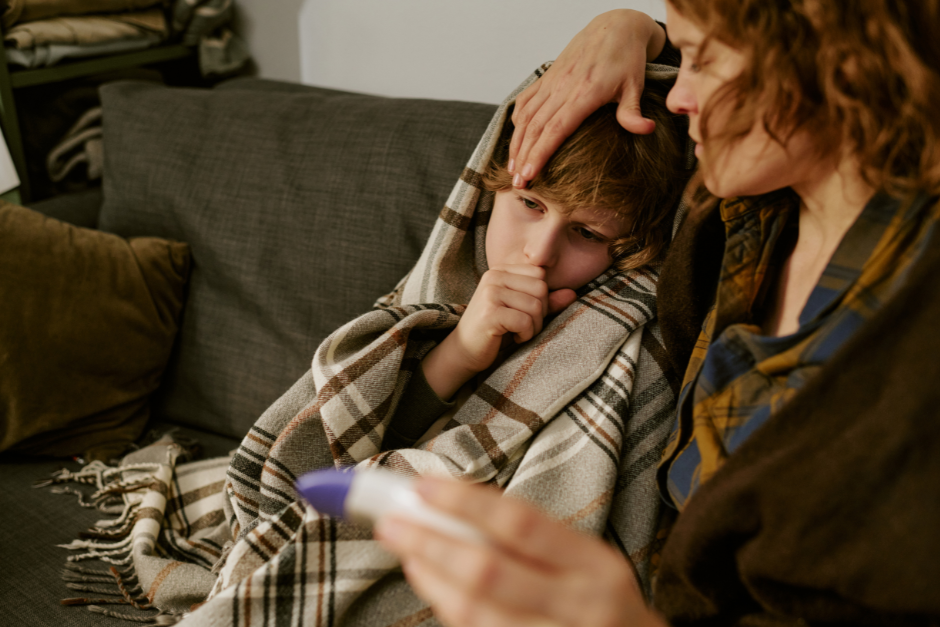
A fever that appears at bedtime.
A stomach bug that starts in the middle of the night.
A stuffy baby who cannot settle because breathing through their nose suddenly feels difficult.
Sick days rarely arrive at a convenient time. When they do, having a few basic supplies ready can save us from searching through cupboards or making a late-night trip to the pharmacy.
A family sick-day kit does not need to be expensive or elaborate. It is simply a collection of practical supplies, important information and age-appropriate medications that can help you care for your child more comfortably while you decide whether they need medical advice or assessment.
Let’s build one together.
Start With a Two-Part Sick-Day Kit
Before we get into what to include, there is one important safety detail.
Your sick-day supplies and medications should not all be stored together in an easy-to-reach basket.
Instead, create two separate parts:
An accessible care basket for non-medication supplies such as a thermometer, tissues, saline, oral syringes, vomit bags and waterproof pads.
Locked medication storage for children’s and adult medications, supplements and other potentially harmful products.
Keep all medication locked, out of sight and out of reach of children, preferably in its original child-resistant packaging.
A child-resistant cap is an added layer of protection. It does not make a medication childproof.
1. A Reliable Digital Thermometer
A digital thermometer is one of the most useful things to have ready before your child becomes sick.
Feeling a child’s forehead may tell us that they seem warm, but it cannot confirm whether they have a fever.
Keep:
A digital thermometer
The thermometer instructions
Spare batteries, if applicable
Disposable probe covers, if required for your thermometer
Alcohol wipes or another manufacturer-approved way to clean it
The most appropriate temperature-taking method depends on your child’s age and the type of thermometer you own. The Canadian Paediatric Society explains which temperature-taking methods are appropriate at different ages and when a fever needs medical assessment.
If several family members use the same thermometer, clean it according to the manufacturer’s directions between uses.
2. Supplies for Stuffy Noses
Babies and young children may have difficulty feeding, drinking and sleeping when their noses are congested.
Helpful supplies can include:
Age-appropriate saline nasal drops or spray
A nasal aspirator or bulb syringe
Soft tissues
A soft washcloth for gently cleaning the face
A cool mist humidifier, if you choose to use one
Saline can help loosen thick nasal mucus. For babies who cannot blow their own nose, an aspirator may help remove mucus after the saline has had a moment to work.
Use suction gently and only as needed. Frequent or forceful suctioning can irritate the delicate tissue inside the nose.
Using a Cool Mist Humidifier Safely
A cool mist humidifier may make dry air feel more comfortable, but it needs regular care.
Health Canada recommends emptying the reservoir whenever a cool mist humidifier is not being used and cleaning and disinfecting it according to the manufacturer’s directions.
Do not allow water to sit in the reservoir between uses.
Place the humidifier and its cord where your child cannot reach, pull or climb toward them. Avoid warm mist humidifiers or vaporizers around young children because hot water and steam can cause burns.
3. Hydration Supplies
Children can lose fluids through vomiting, diarrhea, fever or simply drinking less than usual while they are unwell.
Keep a few hydration tools on hand:
Commercial oral rehydration solution
A medicine cup, spoon or oral syringe
Cups or bottles your child already uses comfortably
Age-appropriate freezer pops made from oral rehydration solution, if available
A small notebook or phone note for tracking fluids, vomiting and urination
Commercial oral rehydration solution contains a specific balance of water, sugar and electrolytes. Sports drinks, juice and pop are not the same thing, particularly for babies and young children experiencing vomiting or diarrhea.
The Canadian Paediatric Society provides age-specific guidance for offering oral rehydration solution and recommends small, frequent amounts when a child is vomiting.
Continue breastfeeding when possible. If your baby drinks formula, prepare it exactly as directed rather than diluting it with additional water.
Watch for possible signs of dehydration, including:
Fewer wet diapers or less urination
A dry mouth or lips
Few or no tears when crying
Sunken eyes
Unusual sleepiness or weakness
Refusing or being unable to drink
Seek medical advice if you are concerned about your child’s hydration, particularly when vomiting or diarrhea is ongoing.
4. A Child-Specific Medication Plan
Some families choose to keep acetaminophen or ibuprofen at home for fever-related discomfort or pain.
The appropriate medication depends on your child’s age, health, hydration and any instructions provided by their healthcare professional.
If you keep children’s medication at home:
Choose a formulation appropriate for your child’s age.
Keep it in its original container and packaging.
Check the active ingredient and concentration every time.
Follow the product label or instructions from your healthcare provider or pharmacist.
Use the measuring device supplied with the medication.
Never use a household teaspoon to measure liquid medication.
Record what was given, how much was given and the time it was given.
Check the expiry date regularly.
Keep all medication locked, out of sight and out of reach.
Ask your pharmacist to help you create a written medication plan based on your child’s current weight, the specific product concentration and their health history.
Update the plan when your child grows, the medication changes or you purchase a product with a different concentration.
Speak with a healthcare professional before giving ibuprofen to a baby younger than six months. Ibuprofen may also be inappropriate when a child is dehydrated or not drinking reasonably well.
Do not give aspirin or ASA to a child unless it has been specifically prescribed by their healthcare provider.
What About Alternating Acetaminophen and Ibuprofen?
Do not automatically alternate medications or give them together.
Using more than one product can make dosing mistakes more likely, especially during an exhausting night when several caregivers are involved.
Only alternate medications when a healthcare professional has recommended it for your child and has given you a clear schedule to follow.
5. A Medication Tracking Sheet
When we are tired and worried, it is surprisingly easy to forget whether medication was given at 1:00 a.m. or whether we only considered giving it.
Keep a simple tracking sheet with space to record:
The date
The child’s symptoms
Their temperature and how it was taken
The medication name
The product concentration
The amount given
The time it was given
Fluids offered
Vomiting or diarrhea
Wet diapers or urination
Advice received from a healthcare professional
This is especially helpful when more than one adult is caring for the child.
It can also provide useful information if you speak with a nurse, pharmacist or healthcare provider.
6. Comfort and Cleanup Supplies
Not every sick-day essential comes from the pharmacy.
Consider keeping:
Soft tissues
A waterproof mattress or furniture pad
Disposable vomit bags or a washable container
Paper towels
Garbage bags
Disposable gloves
A laundry bag or washable bin
An age-appropriate household cleaner or disinfectant
A soft washcloth
Lightweight, comfortable clothing
A familiar book, quiet toy or comfort item
Follow the label when using any cleaner or disinfectant, including instructions for ventilation, surface compatibility and required contact time.
Never mix cleaning products.
Store cleaners and disinfecting wipes locked, out of sight and out of reach of children.
7. Prescription and Emergency Medications
If your child has been prescribed an epinephrine auto-injector, inhaler, seizure medication or another emergency medication, include it in your family’s sick-day planning.
Make sure regular caregivers know:
What the medication is for
Where it is stored
How and when to use it
When to call 911
Where to find your child’s emergency plan
When the medication expires
Emergency medication needs to remain quickly accessible to the adults who may need it while still being stored safely around children.
Follow the storage instructions for the specific medication.
Antihistamines Do Not Replace Epinephrine
An antihistamine may sometimes be recommended for isolated itching, hives or other mild allergy symptoms.
However, antihistamines do not stop anaphylaxis and should never delay epinephrine when anaphylaxis is suspected.
If your child has a known allergy, follow their individual emergency plan. If prescribed epinephrine is given, call 911.
Our guide, What to Do If Your Baby Has an Allergic Reaction, explains the signs to watch for and when a reaction should be treated as an emergency.
What Should Not Automatically Go Into a Child’s Sick-Day Kit?
A stocked cupboard does not need to contain a medication for every possible symptom.
Over-the-Counter Cough and Cold Medicine
Health Canada says non-prescription cough and cold medicines should never be given to children under six.
These products may contain several active ingredients, increasing the chance of accidentally giving a child two medications containing the same ingredient.
For children aged six and older, check the label and speak with a pharmacist or healthcare provider if you are unsure whether a product is appropriate.
Anti-Nausea Medication
Do not add anti-nausea medication to a young child’s kit “just in case.”
Products containing dimenhydrinate, including Gravol, can cause significant drowsiness and may not be appropriate for every child or every cause of vomiting.
Ask your child’s healthcare provider or pharmacist whether an anti-nausea medication is appropriate, which product to use and what dose to give before you need it.
Suppositories
Medication suppositories may be helpful in specific circumstances, but they should not be treated as a routine substitute whenever a child vomits.
Use them only when recommended by a healthcare provider or pharmacist, and follow the instructions for the specific medication and child.
Adult Medication
Keep adult and children’s medication separate and clearly labelled.
Never estimate a child’s dose from an adult medication or give a child a product that is not labelled or prescribed for them.
Do You Need a Pulse Oximeter?
A home pulse oximeter is not an essential sick-day tool for most families.
Health Canada cautions that home pulse oximeters have limitations and that readings can be affected by movement, cold hands, finger size, nail products, poor circulation, device fit and skin pigmentation.
A normal-looking number should never override concerning symptoms.
If your child is struggling to breathe, has blue, grey or unusually pale lips or skin, is difficult to wake or appears seriously unwell, seek emergency help based on what you are seeing rather than waiting for a device reading.
If your child’s healthcare team recommends home oxygen monitoring because of a specific medical condition, ask them which device to use, how to use it and which readings or symptoms require medical attention.
Add an Emergency Information Sheet
Keep a printed information sheet where caregivers can find it quickly.
Include:
Your home address
Parent or guardian phone numbers
An alternate emergency contact
Your child’s allergies and medical conditions
Current medications
Prescribed emergency medication
Your healthcare provider’s contact information
Your provincial or territorial health advice number
The Poison Centre number
The location of your first aid supplies
In Canada, you can call 1-844-POISON-X, or 1-844-764-7669, for a suspected poisoning. Call 911 immediately if your child is unconscious, having difficulty breathing or experiencing another life-threatening emergency.
When a Sick-Day Kit Is Not Enough
A sick-day kit can support comfort and help you monitor symptoms. It cannot tell you why your child is sick or replace medical assessment.
Call 911 if your child:
Is not breathing normally
Is struggling to breathe
Develops blue, grey or very pale colouring
Becomes unresponsive or is extremely difficult to wake
May be experiencing anaphylaxis
Has a seizure requiring emergency care
Appears to have a life-threatening condition
Seek urgent medical care if your baby is younger than three months and has a measured temperature of 38°C or higher.
You should also seek medical advice when your child:
Shows signs of dehydration
Cannot keep fluids down
Has persistent vomiting or diarrhea
Is becoming more sleepy, weak or unwell
Has symptoms that are worsening
Has a fever or other symptoms that concern you
You know your child best. It is always appropriate to ask for help when something does not feel right.
For more detailed fever guidance, including febrile seizures and when to seek medical care, visit Fevers, Febrile Seizures, and What Parents Need to Know.
Review Your Kit Before You Need It
A sick-day kit is only helpful when its contents are current and working.
Review it every few months and whenever:
Your child’s weight changes significantly
A medication or prescription changes
A new allergy or health condition is diagnosed
A product expires
A measuring device becomes damaged or difficult to read
Your thermometer needs a new battery
Another caregiver begins caring for your child
You can also add checking the kit to your fall and spring home-safety routine.
Quick Sick-Day Kit Checklist
Accessible Care Supplies
✔ Digital thermometer and instructions
✔ Spare thermometer batteries
✔ Saline nasal drops or spray
✔ Nasal aspirator for babies and young children
✔ Soft tissues and washcloths
✔ Commercial oral rehydration solution
✔ Oral syringes or medicine cups
✔ Waterproof pads or liners
✔ Disposable vomit bags or a washable container
✔ Paper towels, garbage bags and disposable gloves
✔ Medication and symptom tracking sheet
✔ Printed emergency information
Safely Stored Medication
✔ Child-appropriate fever or pain medication, if used by your family
✔ The original packaging and measuring device
✔ A pharmacist-confirmed dosing plan
✔ Prescribed medications
✔ Prescribed emergency medications and action plans
✔ Clearly separated adult medications
✔ Current, unexpired products
✔ Locked storage that is out of sight and reach
Final Thoughts
Preparing for sick days is not about trying to diagnose every illness at home or filling a cupboard with medications.
It is about making the practical parts a little easier.
A thermometer that works.
Saline ready when your baby is congested.
Oral rehydration solution available before vomiting begins.
Medication stored safely with clear instructions.
Emergency information where every caregiver can find it.
Those small preparations reduce the number of decisions we need to make when we are tired, worried and caring for someone who does not feel well.
Start with the basics, personalize the kit for your family and ask your pharmacist or healthcare provider when you are unsure.
That is prepared parenting. You’ve got this!
Want Product Suggestions?
Explore our Care Kit Essentials for examples of thermometers, nasal-care supplies, oral syringes, waterproof pads and other practical sick-day items.
Always confirm that a product is appropriate for your child’s age and needs, follow the manufacturer’s instructions and keep medication and other potentially harmful products locked, out of sight and out of reach.
Continue Learning
Continue building your family’s safety toolkit with these trusted resources from Bump + Baby Matters.
Infant & Child CPR + Choking Classes
Fevers, Febrile Seizures, and What Parents Need to Know
What to Do If Your Baby Has an Allergic Reaction: A Step-by-Step Guide for Parents
How to Create a Family Emergency Plan: A Practical Guide for Parents
Have a question? We're always happy to help. Send us a message on Instagram.