
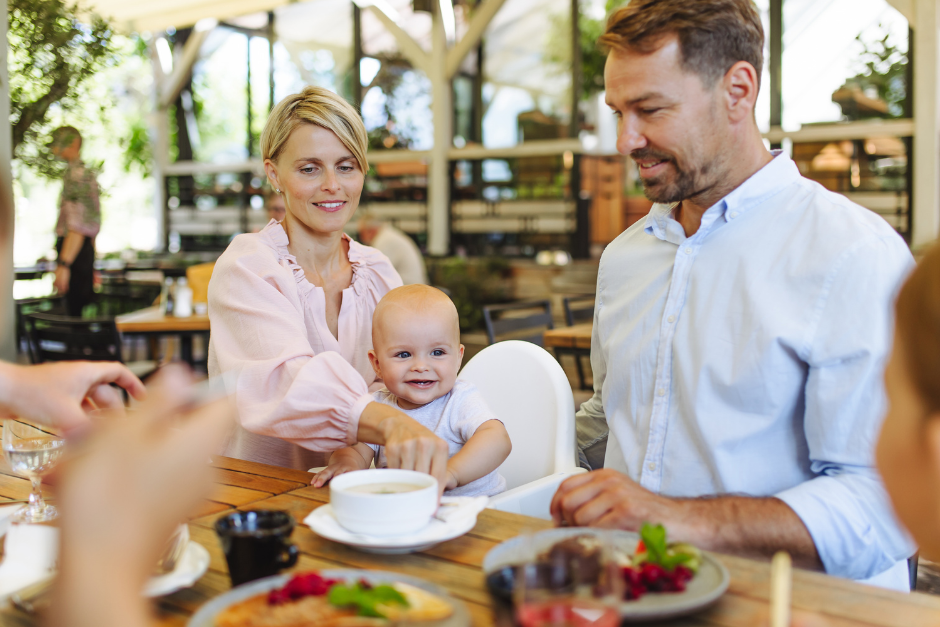
Baby’s first Thanksgiving often comes with a side of commentary.
Someone wants to hand them a dinner roll. Someone else is offering mashed potatoes. A grandparent is asking whether they can have a little taste of pumpkin pie.
And before we have even sat down, we are wondering:
Can my baby actually eat any of this?
If your baby is developmentally ready and has already started solid foods, many Thanksgiving favourites can be included. We usually do not need a separate menu or complicated recipes.
The goal is to adjust the texture, shape, moisture and ingredients to match our baby’s current eating skills.
Here are five Thanksgiving foods we can often modify so baby can explore the meal alongside the rest of the family.
Before Baby Joins the Thanksgiving Table
A busy holiday meal can be distracting, so a quick safety check is worth doing before food reaches the high-chair tray.
Seat baby upright with steady head and neck support.
Stay close and actively supervise the entire time they are eating.
Match the food to baby’s current eating and grasping skills, not age alone.
Make sure firm foods are cooked until they squish easily between your fingers.
Remove bones, skin, gristle, seeds, pits and other tough pieces.
Keep hot food, drinks and serving dishes out of baby’s reach.
Do not give honey, including food cooked or baked with honey, before 12 months.
Check family recipes for common allergens such as milk, egg, wheat, sesame and nuts.
When possible, set aside baby’s portion before adding a lot of salt, sugar or sticky toppings.
Age ranges can give us a general starting point, but babies build feeding skills at different rates. Earlier in the solids journey, they may manage soft, graspable pieces or mashed food on a preloaded spoon. Once they develop a pincer grasp, they may be able to pick up smaller, soft pieces.
If your baby was born prematurely, has difficulty swallowing, has a medical or developmental condition, or is not progressing with textures, ask their healthcare provider or a qualified feeding professional for individualized guidance.
1. Turkey
Turkey provides protein and iron, an important nutrient when babies begin eating solid foods.
For a baby using their whole hand to grasp food, offer a long, wide strip of very tender, moist turkey that is easy to hold. Another option is to finely mince or shred the meat and mix it into mashed potato, sweet potato or squash.
Once baby can pick up small pieces with their thumb and forefinger, offer tender, finely shredded turkey or small, soft pieces.
Before Serving Turkey
Remove every bone, including small fragments.
Remove skin, cartilage and gristle.
Avoid firm cubes or thick, dry chunks.
Choose moist, tender meat. Dark meat is often easier to keep moist than turkey breast.
If the meat is dry, finely shred or mince it and mix it with a soft food or a little unsalted cooking liquid.
2. Sweet Potatoes
Sweet potatoes are easy to mash, roast or cut into graspable pieces.
For a baby using a whole-hand grasp, offer a thick, finger-length piece cooked until very soft, or serve mashed sweet potato on a preloaded spoon.
For a baby using a pincer grasp, offer smaller soft pieces that still squish easily between your fingers.
Before Serving Sweet Potatoes
Remove tough skin.
Cook until completely soft, including the centre.
Skip whole marshmallows or sticky clumps of melted marshmallow on baby’s portion.
Check glazes for honey if baby is younger than 12 months.
Butter and milk are common ingredients in sweet potato dishes. If either is new for your baby or you are managing a food allergy, check the recipe before serving.
3. Roasted Squash
Butternut, acorn and other winter squash can all work well when cooked until tender.
For a baby using a whole-hand grasp, offer a thick, soft wedge or mash the squash and load it onto a spoon.
For a baby using a pincer grasp, offer small, soft pieces.
Before Serving Squash
Remove the peel, seeds and stringy centre.
Make sure roasted edges have not become hard or chewy.
Press the thickest part between your fingers to check that it mashes easily.
Set aside baby’s serving before adding honey or hard toppings such as whole or chopped nuts.
4. Mashed Potatoes
Mashed potatoes can be offered on a preloaded spoon or placed directly on the tray for baby to scoop and explore.
They do not need to be perfectly smooth. Babies benefit from progressing through a variety of soft textures as their skills develop.
Before Serving Mashed Potatoes
Check for firm pieces of potato, peel or other ingredients that have not softened.
If the potatoes are very thick, gluey or difficult to move around the mouth, loosen baby’s portion with a little water, breastmilk, prepared formula or unsalted cooking liquid.
Remember that mashed potatoes may contain milk or butter.
Set aside a portion before heavily salting the family dish when practical.
A little seasoning is not something we need to fear. Herbs and spices can help babies experience the flavours their family enjoys. The goal is simply to avoid making heavily salted foods a regular part of their diet.
5. Pumpkin and Pumpkin Pie
Plain cooked pumpkin or unsweetened pumpkin purée can be served on a preloaded spoon or mixed into cereal, yogurt or another familiar food.
Soft roasted pumpkin can also be offered in a graspable wedge or smaller pieces, depending on baby’s eating skills.
But what about the pie everyone else is eating?
Pumpkin pie often contains milk, egg and wheat, along with added sugar. If your baby has started solids, the ingredients are appropriate for them and the filling has a soft texture, a small taste can be a family choice.
That is different from making dessert a regular part of baby’s meals. Thanksgiving is one meal, and we do not need to turn a taste of pie into a moral issue.
Before Serving Pumpkin or Pie
Use plain pumpkin purée, not sweetened pumpkin pie filling, for an everyday option.
Check the full recipe for allergens and honey.
Do not give any food containing honey before 12 months.
Avoid hard crust edges, whole or chopped nuts, and sticky toppings.
Offer a small amount of soft filling rather than a large piece of pie.
What About Stuffing, Cranberry Sauce, Gravy and Dinner Rolls?
These foods are not automatically off the table, but the recipe and texture matter.
Stuffing: Check for firm sausage pieces, whole nuts, dried fruit and other hard or chewy ingredients. Offer only a soft, moist portion that baby can manage. Stuffing can also be high in sodium and may contain egg, milk or wheat.
Cranberry sauce: Whole cranberries are round and may be difficult to manage. Mash them thoroughly or offer a small amount of smooth sauce mixed into another food. Cranberry sauce often contains added sugar, so think of it as a taste rather than a main part of the meal.
Gravy: Gravy may be high in sodium and can contain milk, wheat or other ingredients. A small amount can add moisture, but unsalted cooking liquid or a soft mash is often a simpler option for baby.
Dinner rolls: Soft bread can become gummy in the mouth. Avoid handing baby a large, doughy piece. A thin, lightly toasted strip may be easier to manage for a baby who is ready for finger foods. Check for common allergens such as milk, egg, wheat and sesame.
Common Thanksgiving Choking Hazards
Holiday foods may need more than one quick cut before they are ready for a baby or young child.
Pay particular attention to:
Whole grapes and whole cranberries
Whole or chopped nuts
Popcorn
Marshmallows
Hard candy
Raw or firm vegetable pieces
Firm cubes or large chunks of meat
Coin-shaped sausage pieces
Hard crusts or crunchy toppings
Thick spoonfuls of nut butter
Bones, pits and seeds
Hard, small and round foods, along with smooth and sticky foods, can block a young child’s airway. Depending on the food, we may be able to cook it until soft, change its shape, spread it thinly or leave it off baby’s plate for now.
Thanksgiving Questions Parents Often Ask
Can a 6-Month-Old Eat Thanksgiving Dinner?
Many babies begin solid foods at around six months, but readiness and individual development matter more than the date on the calendar.
If your baby is ready for solids and has begun eating, they may be able to explore modified foods from the family meal. Breastmilk or infant formula remains an important source of nutrition while complementary foods are introduced.
Can Babies Eat Turkey?
Yes. Fully cooked, tender turkey can provide protein and iron. Remove bones, skin, cartilage and gristle, then change the moisture, texture and size to suit your baby’s current eating skills.
Is Gagging the Same as Choking?
No. Gagging is a protective reflex and can be noisy. A baby who is gagging may cough, retch, make sounds or turn red while continuing to move air.
Severe choking happens when the airway is blocked. A baby may be unable to breathe, cry or cough effectively, and choking can be very quiet.
Knowing the difference can help us respond appropriately instead of putting our fingers into a gagging baby’s mouth or delaying action during severe choking.
What Should I Do If My Baby Chokes?
If a baby cannot breathe, cry or cough effectively, begin infant choking first aid and activate emergency services immediately.
Reading about choking is helpful, but it does not replace hands-on education. Our Infant & Child CPR + Choking classes teach parents and caregivers how to recognize severe choking, respond with the current infant choking sequence and begin CPR if a baby becomes unresponsive.
A Seat at the Table Is Enough
Baby does not need to eat a full Thanksgiving dinner for the experience to count.
They may touch the food, smell it, lick it, take one bite, drop every piece or decide they are finished. They are still learning about family meals, new textures and the joy of being included.
Preparedness is not about making every bite perfect. It is about knowing what to look for, making a few thoughtful changes and feeling more confident about what to do if something happens.
Enjoy the meal, the mess and the memories. You’ve got this!
Continue Learning
Continue building your family’s safety toolkit with these trusted resources from Bump + Baby Matters.
Infant & Child CPR + Choking Classes
Introducing Allergens to Babies: When and How to Start (Canadian Guidelines for Parents)
Is My Baby Ready for Solids? Readiness Signs, First Foods, and Safe Starting Tips
Mouth Mapping: How Babies Learn to Manage Food When Starting Solids
Starting Solids: How to Manage the Mess Without Limiting Learning
Have a question? We're always happy to help. Send us a message on Instagram.