
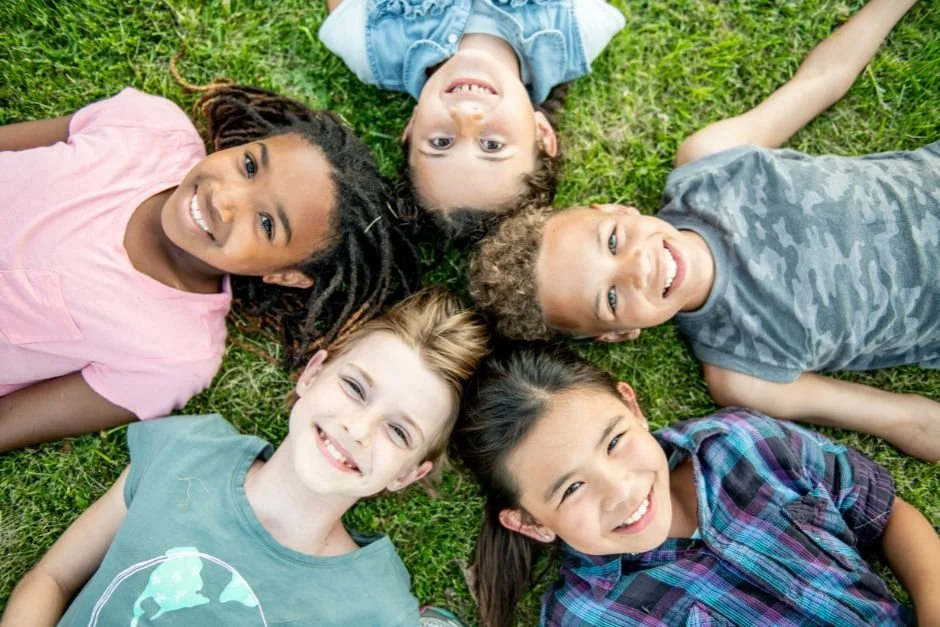
Most of us hope to raise children who are kind.
Not only children who remember to say “please” and “thank you,” but children who notice when someone needs help, make room for others, respect differences, and understand that everyone deserves to feel like they belong.
That kind of learning does not come from one big conversation.
It grows through hundreds of small moments: the way we speak about other people, how we respond to questions, what we do when someone is left out, and how we repair things when we get them wrong.
Our children are listening to what we teach. They are also watching how we move through the world.
The encouraging part is that we do not have to handle every moment perfectly. We simply need to keep noticing, talking, modelling, and trying again together.
What Do Kindness, Empathy, Compassion, and Inclusion Mean?
These words are closely connected, but they are not exactly the same.
Empathy is the growing ability to recognize or imagine what another person may be feeling.
Compassion is caring about that experience and wanting to respond in a helpful way.
Kindness is the action we take to show care, respect, or consideration.
Inclusion means helping create spaces where people are welcomed, respected, able to participate, and treated as though they truly belong.
A child may show these qualities in many different ways.
One child may offer a hug. Another may bring a favourite toy, sit quietly nearby, get an adult, make room at the table, or change the rules of a game so someone else can participate.
There is no single “correct” way for a child to show that they care.
Kindness Is a Skill, Not a Personality Type
We sometimes describe one child as “the kind one” or another as “not very empathetic.”
But kindness is not a fixed trait that a child either has or does not have.
Children are still learning how to:
Recognize emotions
Understand another person’s perspective
Manage impulses
Communicate their needs
Cope with disappointment
Solve social problems
Notice how their actions affect others
Repair a relationship after something goes wrong
Those skills take time, support, and practice.
A child who grabs a toy, refuses to share, says something hurtful, or walks away from an upset friend is not automatically an unkind child. They may be overwhelmed, unsure what to do, protecting a boundary, missing a social cue, or still developing the skills the situation requires.
We can address the behaviour without turning it into an identity.
Instead of saying, “You’re being mean,” we might say:
“You wanted the toy, but grabbing hurt their hand. I’m going to help you ask for a turn.”
That approach still sets a clear limit. It also teaches the skill we want the child to use next time.
A Note About Ages and Stages
The age ranges below are general guides, not a checklist or a test of whether a child is caring enough.
Temperament, communication style, lived experience, culture, development, and neurodivergence can all influence how a child recognizes and expresses empathy.
Some children communicate care through words and facial expressions. Others show it through actions, practical help, parallel play, sharing information, giving space, or seeking support from an adult.
What matters most is helping each child build from where they are.
What Kindness and Inclusion Can Look Like at Different Ages
Babies and Toddlers: Birth to Age 2
Babies are not yet able to understand another person’s perspective in the way an older child or adult can.
They are, however, beginning to notice emotions, respond to tone and facial expressions, imitate behaviour, and learn what happens when someone needs comfort or help.
You might notice your baby or toddler:
Crying when another child cries
Watching your face to understand how to respond
Patting or touching someone who is upset
Offering a toy or comfort item
Copying gentle or caring behaviour
Reacting to an adult’s tone of voice
These are early building blocks, not mature empathy.
What parents and caregivers can do
Respond warmly when your child is distressed.
Use simple words for emotions:
“You’re sad that Daddy left the room.”
Narrate caring actions:
“Your brother is crying. I’m going to check if he needs help.”
Model gentle behaviour:
“I’m moving the cat carefully because she is resting.”
Include books, family photos, dolls, toys, and everyday images that reflect many skin tones, cultures, family structures, bodies, disabilities, and ways of communicating.
At this age, children learn far more from what we repeatedly show them than from a long explanation.
Preschoolers: Ages 3 to 5
Preschoolers are becoming more aware of other people’s feelings, but they are still learning to manage strong emotions and impulses.
They may be deeply concerned when a friend cries one moment and grab the friend’s toy the next.
That does not mean the lesson has failed. It means the skill is still developing.
You might notice your preschooler:
Asking direct questions about physical or family differences
Wanting to help with simple tasks
Becoming upset about what feels fair or unfair
Practising sharing and taking turns
Beginning to notice when someone is left out
Using imaginative play to explore relationships
Offering comfort while still needing help managing their own emotions
What parents and caregivers can do
Use short, concrete language:
“Everyone gets a chance to play.”
Help them connect actions with impact:
“When you moved over, Maya had room to sit with you.”
Answer questions calmly rather than shushing curiosity:
“Yes, he is using a wheelchair to move around. We do not know why he uses it, and we do not need to guess.”
Use pretend play to practise common situations:
“What could the bear say if she wants to join the game?”
Support boundaries while teaching respectful communication:
“You do not have to give away the toy you are using. You can say, ‘I’m still playing with it. You can have a turn when I’m finished.’”
Preschoolers need repetition. They may understand a lesson during a calm conversation and still need help using it when they are tired, excited, disappointed, or overwhelmed.
School-Aged Children: Ages 6 to 10
As children move through the early school years, they often become more interested in friendship, fairness, rules, group belonging, and how other people see them.
Their ability to consider another person’s perspective is growing, but it is not complete.
They may recognize that someone was excluded while also worrying about what will happen if they speak up. They may understand another child’s feelings after the situation is explained but not recognize the impact in the moment.
You might notice your school-aged child:
Developing stronger opinions about fairness
Becoming more aware of social groups and exclusion
Comparing themselves with peers
Recognizing stereotypes or unfair treatment
Wanting to help but feeling unsure what to do
Understanding that intention and impact are not always the same
Showing greater interest in causes, communities, or social issues
What parents and caregivers can do
Talk about impact as well as intention:
“You may not have meant to embarrass him, but he still felt hurt. What could help repair that?”
Discuss fairness versus sameness:
“Everyone is doing the same activity, but not everyone needs the same support to participate.”
Ask open questions about books, shows, school, and everyday situations:
“Whose voice did we hear in that story?”
“Was there anyone who could not participate?”
“What could the group have done differently?”
Help your child think of realistic actions:
“You do not have to solve everything yourself. You could sit with them, invite them to join, say that the comment was not okay, or ask an adult for help.”
At this age, kindness becomes increasingly connected to courage, responsibility, and the choices children make when other people are watching.
Eight Everyday Ways to Raise Kind and Inclusive Kids
1. Model What You Hope to See
Children notice far more than the lessons we intentionally teach.
They notice:
How we speak to service workers
How we describe someone who is different from us
Whether we gossip or make jokes at another person’s expense
How we respond when someone needs additional time or support
Whether we listen when another person shares a different perspective
How we handle frustration
Whether we apologize when we get something wrong
We do not need to model perfection.
We can model responsibility:
“I interrupted you. I’m sorry. Please finish what you were saying.”
“I made an assumption, and I should not have done that.”
“I was frustrated, but I did not speak respectfully. I’m going to try that again.”
Children learn that mistakes do not need to be hidden. They can be acknowledged and repaired.
2. Name Emotions and Actions Specifically
“Be kind” is a lovely reminder, but it does not always tell a child what kindness looks like in that particular moment.
Specific feedback is more useful:
“You noticed she was carrying a lot and held the door.”
“You waited while he finished speaking.”
“You saw that the game was too fast and asked how everyone could join.”
“You were angry, and you kept your hands safe.”
This helps children connect an action with its effect.
It also keeps the focus on what they did rather than assigning them a permanent label.
3. Answer Questions About Differences Calmly
Children notice skin colour, mobility devices, body size, communication differences, religious clothing, family structures, and many other parts of human diversity.
Noticing is not the problem.
What matters is how adults respond.
Shushing, scolding, or quickly changing the subject can unintentionally suggest that a person’s difference is embarrassing or inappropriate to discuss.
Instead, keep your answer simple, neutral, and respectful:
“Some people communicate with words, and some use signs, pictures, or a device.”
“Families are formed in many different ways.”
“She is wearing a hijab. Some Muslim women and girls choose to wear one as part of their faith.”
“He uses a wheelchair to move around.”
Avoid guessing about a stranger’s diagnosis, health, history, identity, or personal circumstances.
It is always okay to say:
“I don’t know the answer, and we should not make assumptions about someone we do not know.”
4. Make Representation Part of Everyday Life
Books, toys, shows, art supplies, music, and family activities can all help children understand whose stories and experiences matter.
Look for:
Main characters from different cultures and racial backgrounds
People with disabilities taking part in ordinary life
A variety of family structures
Different languages and ways of communicating
Characters with different body types
Stories that reflect your child’s own identity
Stories that introduce experiences beyond your family’s own
Children need both mirrors and windows.
They need opportunities to see themselves reflected with dignity, and opportunities to learn about lives that differ from their own.
Representation is most meaningful when diverse characters are allowed to be funny, adventurous, creative, complicated, and central to the story. They should not appear only when the lesson is specifically about difference.
You do not need to replace every book or toy at once.
Start by noticing what is already present and whose experiences may be missing.
5. Teach Inclusion as an Action
Telling children that “everyone belongs” is important.
Helping them understand what belonging looks like is even more powerful.
Inclusion might mean:
Making room at the table
Asking someone how they prefer to participate
Slowing down a game
Changing a rule that creates an unnecessary barrier
Using a person’s correct name and pronouns
Waiting while someone communicates
Choosing an accessible meeting place
Offering an invitation without pressuring someone to accept
Speaking directly to the person rather than only to their support person
Getting an adult when someone is repeatedly excluded or targeted
We can ask:
“Is there anything making it hard for someone to join?”
“What could we change so more people can participate?”
“Did we ask what they wanted, or did we decide for them?”
Inclusion is not simply bringing someone into a space. It is helping make the space one in which they can participate meaningfully.
6. Teach That Kindness Includes Boundaries
Kindness does not mean giving everyone physical affection.
It does not mean sharing every personal belonging, accepting hurtful behaviour, ignoring discomfort, or remaining in an unsafe situation.
Children can be caring and still say:
“No, thank you.”
“I don’t want a hug.”
“I’m still using that.”
“I need some space.”
“I don’t like that.”
“I’m going to get an adult.”
We can teach children to respect another person’s boundaries while trusting their own.
A child does not have to be friends with everyone. They do need to treat people with basic dignity and avoid deliberately humiliating, targeting, or excluding them.
That distinction protects both kindness and personal safety.
7. Make Room for Big Feelings
Kind children still feel jealous, angry, disappointed, overwhelmed, and left out.
They may still yell, grab, say something hurtful, refuse to share, or struggle to respond empathetically when their own emotions are taking over.
We can hold a boundary and acknowledge the feeling at the same time:
“You are allowed to be angry. I will not let you hit.”
“You really wanted to be first. We are still going to wait for our turn.”
“You do not have to share the toy you are using. You may not tease someone for asking.”
When a child is highly upset, calming and safety come before a long discussion.
Once everyone is regulated, we can return to what happened and practise a different response.
8. Focus on Repair Instead of Shame
Children will make mistakes. So will adults.
Repair teaches more than humiliation or a rushed apology.
Depending on the situation, repair may involve:
Stopping the harmful behaviour.
Checking whether the other person is okay.
Naming what happened without excuses.
Listening to the impact.
Apologizing when the child is ready to do so meaningfully.
Fixing, replacing, rebuilding, or helping where possible.
Making a plan for what to try next time.
Instead of immediately insisting, “Say sorry,” we might ask:
“What happened?”
“How do you think that affected them?”
“What could help make this a little better?”
“What will you do differently next time?”
An apology can be part of repair, but it is not the entire process.
Helpful Language for Real-Life Moments
When another child is being left out
“It looks like Luca wants to join. Is there a role he could have in the game?”
For an older child:
“You do not have to be close friends with everyone, but repeatedly leaving one person out to hurt or control them is not okay.”
When your child does not want to share
“You do not have to give away the toy you are using. You can tell her when it will be available.”
For community toys:
“This toy is for everyone. You may finish your turn, and then it will be someone else’s turn.”
When your child asks about a disability
“Yes, she is using a communication device. It helps her share what she wants to say.”
“I don’t know why he walks that way. Bodies move in many different ways, and we do not need to know someone’s private information.”
When your child says something hurtful
“That word can hurt people. We do not use it as an insult.”
“You may be angry with your friend. You may not make fun of their body, family, culture, disability, or identity.”
When your child notices unfair treatment
“You noticed something important. What did you see?”
“What do you think would make the situation fairer?”
“Would you like help deciding what to do?”
When your child has been excluded
“That sounds hurtful. I’m glad you told me.”
“You should not have to earn basic respect by being extra nice.”
“Let’s think about what support you need and which adult can help.”
Inclusion Does Not Mean Forcing Friendship
Children are allowed to choose their friends.
They will naturally connect more easily with some people than others, and not every child needs to be included in every private plan, birthday party, or friendship.
Inclusion does mean that we do not use invitations, group membership, secrets, or friendship as a way to repeatedly humiliate, control, or target someone.
We can teach children to handle private plans thoughtfully:
“We are not inviting the whole class, so we will give out invitations privately.”
“You can make plans with a close friend. You may not discuss them repeatedly in front of someone to make them feel left out.”
This protects children’s right to genuine friendship while also teaching consideration.
When Exclusion or Unkind Behaviour Needs Adult Support
Children will experience disagreements, shifting friendships, and moments of exclusion.
Not every conflict is bullying.
Repeated targeting, humiliation, intimidation, or exclusion involving a power imbalance is different from a one-time argument or a friendship that naturally changes.
Signs that more adult involvement may be needed include:
The same child is repeatedly targeted or excluded
The behaviour continues after being addressed
A child seems afraid to attend school, child care, activities, or social events
The behaviour is affecting sleep, mood, confidence, or daily functioning
A child feels unable to stop what is happening
There are threats, physical aggression, discriminatory comments, or online harassment
Adults are aware of the behaviour but it continues
Contact the child’s teacher, child-care provider, coach, program leader, or another appropriate professional.
Children should not be expected to solve repeated targeting on their own. Telling a child to “just ignore it” or “be extra kind” can leave them carrying responsibility for behaviour that requires adult intervention.
A child who is using bullying behaviour also needs clear limits, accountability, and support to learn safer ways to manage emotions, relationships, conflict, and social influence.
✅ A Quick Kindness and Inclusion Check-In for Families
Every so often, we can pause and ask:
✔ Do our books, toys, and media reflect many different people and families?
✔ Do we speak respectfully about people when they are not in the room?
✔ Do we answer questions about differences calmly and honestly?
✔ Do we avoid guessing about another person’s body, health, identity, or circumstances?
✔ Do we teach our child what kindness looks like instead of only saying “be kind”?
✔ Do we model apologies and repair?
✔ Do we protect our child’s boundaries while teaching respect for others?
✔ Do we talk about fairness, access, and participation rather than assuming sameness is always fair?
✔ Do we step in when exclusion becomes repeated, targeted, or harmful?
✔ Do the other adults who care for our child understand the language and expectations we use at home?
This is not a scorecard.
It is simply a way to notice where kindness and inclusion are already part of family life and where we might become a little more intentional.
Final Thoughts
We are not raising perfect children.
We are raising people who are learning how to understand themselves, live alongside others, manage difficult emotions, respect boundaries, and repair relationships.
Some days, our children will surprise us with their thoughtfulness.
Other days, we may wonder whether any of our conversations are sinking in.
Both are part of the process.
Kindness is not about getting every interaction right. It is about noticing, taking responsibility, practising new skills, and continuing to grow together.
The small moments matter.
Every time we answer a question without shame, make room for another person, protect a boundary, challenge an unfair comment, or apologize after a mistake, we are showing our children what care and belonging can look like. You’ve got this!
Continue Learning
Continue building your family's safety toolkit with these trusted resources from Bump + Baby Matters.
Infant & Child CPR & Choking Classes
How to Talk to Kids About Disabilities: A Guide for Parents
Nurturing Mental Wellness in Our Children: A Guide for Parents
Browse More Parent Safety Articles
Have a question? We're always happy to help. Send us a message on Instagram.