
Safe Storage Made Simple: Real-Life Options for Families
We know it’s easy to hear “store it safely” and still wonder what that actually looks like in real homes. Safe storage isn’t about perfection — it’s about reducing access in everyday moments and choosing options that work for real families.
Let’s walk through it together.
What “Safe Storage” Really Means
Safe storage works best in layers. No single product or habit does everything on its own.
We often think in terms of:
Out of reach
Out of sight
Locked
Original container
Put away right away
The more layers we can reasonably use, the safer the environment becomes.
Layer 1: Out of Reach
This is often the first step — and it helps, especially for babies and toddlers.
What this can look like:
High shelves
Upper cupboards
Wall-mounted cabinets
Helpful to know:
Once kids start climbing or problem-solving, this layer works best when combined with locks and closed storage.
Layer 2: Out of Sight
Kids are naturally curious. If something looks interesting, colourful, or familiar, curiosity kicks in fast.
Out of sight can mean:
Solid (not clear) containers
Closed cupboards instead of open shelving
Storage that doesn’t resemble snack or toy bins
If it isn’t seen, it’s less likely to be explored — especially for younger kids.
Layer 3: Locked Storage
Locks are one of the most effective layers, especially once kids are mobile.
Common lock options:
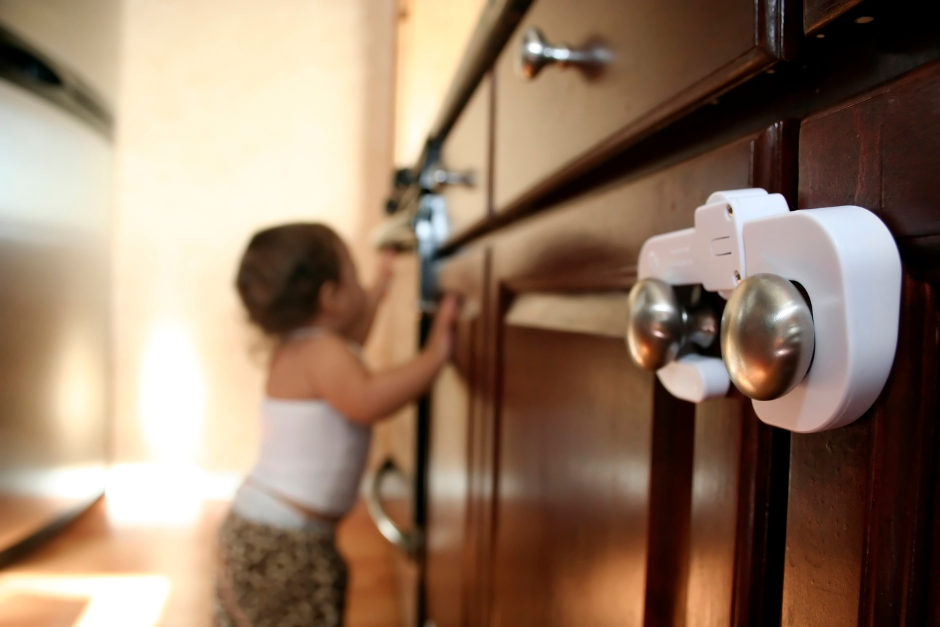
Cabinet locks
Combination or key-locked boxes
Lockable medicine cabinets
Locking storage totes
Locks don’t need to be complicated — they just need to slow access long enough for supervision to step in.
Layer 4: Original Containers
Original packaging matters more than we sometimes realize.
Why this helps:
Clear labels and dosing instructions
Child-resistant features
Poison Control information if needed
Avoid transferring medications or chemicals into food containers, bags, or unlabelled jars — even when it feels more organized.
Layer 5: Put Away Right Away
Many poison exposures happen during everyday transitions — not because someone wasn’t careful, but because life is busy.
Common moments:
Unpacking groceries
After a sick day
Bedtime routines
“Just for a second” moments
Building the habit of putting items away immediately after use is one of the simplest safety tools we have.
Safe storage isn’t about eliminating all risk — it’s about reducing access and buying time. Small changes still matter, and we don’t have to do everything at once.
Want Product Suggestions?
Check out our handpicked collection of safe sleep essentials for families!
→ Safe Storage & Child Proofing Essentials
Continue Learning
Continue building your family’s safety toolkit with these trusted resources from Bump + Baby Matters.
Infant & Child CPR + Choking Classes
Have a question? We're always happy to help. Send us a message on Instagram.