
Originally published April 19, 2026. Last updated July 28, 2026.
Designing a nursery can be one of the most exciting parts of preparing for a baby.
We choose colours, organize tiny clothes and create a space where we imagine sleepy cuddles, late-night feeds and so many everyday moments together.
While we are thinking about how the room will look, it is also worth taking a few minutes to consider how the room will work as our baby grows.
A newborn may spend most of their time sleeping, feeding and being held. Before long, that same baby may be rolling, reaching, pulling to stand and discovering that dresser drawers make surprisingly effective climbing steps.
The goal is not to create a perfect room or predict every possible risk.
It is to identify the hazards our baby cannot recognize for themselves and make practical changes before those new skills appear.
Let’s walk through how to create a nursery that feels calm, functional and safer for every stage.
Start With a Sleep Space That Meets Current Canadian Requirements
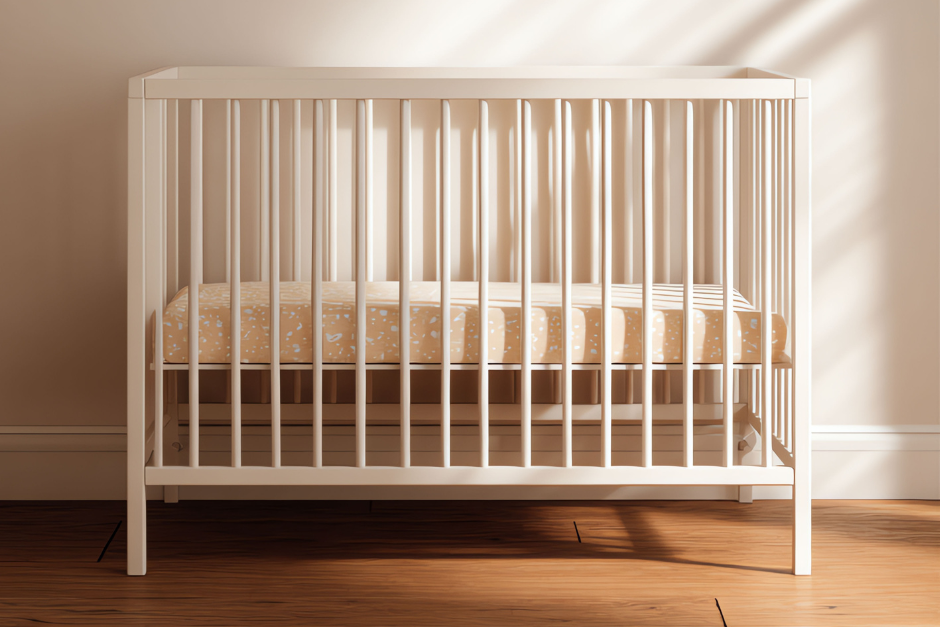
The safest place for a baby to sleep is in a crib, cradle or bassinet that meets current Canadian safety requirements.
Whichever sleep space you choose:
Follow the manufacturer’s assembly and use instructions.
Check the recommended age, weight, height and developmental limits.
Use only the mattress and replacement parts approved by the manufacturer.
Check regularly for loose screws, missing hardware, damage or worn parts.
Do not modify the product or add an aftermarket mattress, padding or attachment.
When buying or borrowing a used crib, cradle or bassinet, look for a product label with the model name or number, date of manufacture and clear instructions.
Cribs made before September 1986 should not be used. Drop-side cribs are also not permitted in Canada.
A second-hand product may look perfectly fine while still having missing parts, an outdated design or a recall that the previous owner did not know about.
Health Canada’s guide to setting up a safe nursery is a helpful place to review the current recommendations before buying, borrowing or assembling your baby’s sleep space.
Choose a Safer Place for the Crib
Where the crib is placed matters just as much as what is inside it.
When choosing a location, look beyond the newborn stage. Consider what your baby may eventually be able to reach when they can sit, stand or pull themselves higher on the crib rails.
Place the crib, cradle or bassinet away from:
Windows and patio doors
Blind and curtain cords
Curtains that can be pulled into the crib
Baby monitor cords
Sound-machine cords
Lamps and electrical cords
Extension cords and electrical plugs
Shelves, mirrors and wall hangings
Other furniture that could be reached or used for climbing
Small objects that may eventually become reachable
Avoid placing shelves, framed pictures, mirrors or heavy décor directly above the crib.
Even an item that feels securely attached today may loosen over time or be pulled down once a child becomes more mobile.
The simplest approach is to decorate the room rather than the sleep space.
Room Sharing During the First Six Months
Health Canada recommends placing a baby’s crib, cradle or bassinet in the parent or caregiver’s bedroom for the first six months.
Room sharing means that baby has their own separate sleep surface in the same room as the caregiver.
This makes it easier to feed, comfort and check on baby while still providing a sleep space designed specifically for them.
When placing the crib or bassinet beside your bed, make sure that:
Adult pillows, blankets and bedding cannot fall into the baby’s sleep space.
Charging cords and bedside lamp cords are completely out of reach.
The sleep space is not positioned beside a heater or another source of excessive warmth.
There are no medications, coins, button batteries or other small objects within reach.
A nursery safety check applies wherever your baby sleeps, including your bedroom, a grandparent’s home, a childcare setting or a vacation rental.
Make Every Cord Unreachable
Cords can become accessible sooner than we expect.
A cord that was out of reach when baby was lying down may become reachable once they can sit, push up, stand or pull furniture closer.
Rather than relying on one recommended distance, the goal is to make sure every cord remains completely out of reach at every stage.
Window-Covering Cords
Long accessible window-covering cords can create a strangulation hazard.
This includes cords:
Along the side of a blind
Inside or behind the window covering
Attached to a loop or chain
Hanging near furniture a child could climb
The safest window coverings are those without long accessible cords.
Health Canada recommends replacing older window coverings with long accessible cords, beginning with children’s bedrooms and play spaces.
If older coverings cannot be replaced immediately:
Keep every cord high and completely out of reach.
Follow the manufacturer’s instructions and warnings.
Secure any supplied tension device firmly to the wall.
Use an appropriate cleat or tie-down device to keep cords high.
Do not place a crib, bed, playpen or climbable furniture near the window.
Recheck the cords whether the covering is fully open, closed or somewhere in between.
A cord cover or sheath should not be treated as a complete solution if a child can still access a long cord or form a loop.
Health Canada’s window covering safety guidance explains how to identify long accessible cords and reduce the risk in homes where children live or visit.
Baby Monitors, Sound Machines and Lamps
Baby monitors and other electronics can be helpful, but their cords need careful placement.
Mount the monitor on a wall or place it on a stable surface where both the monitor and its cord are completely out of reach.
Do not:
Attach a monitor to the crib.
Run the cord along the crib rails.
place the cord between the crib and wall where a child may eventually reach it.
Drape a cord behind or over the crib.
Assume a cord will remain unreachable as baby grows.
Route electronic cords securely, follow the product manufacturer’s instructions and check the setup from inside the crib’s possible reach area.
Physical placement and digital security both matter. Our guide, Best Practices for Securing Your Wi-Fi Baby Monitor (Simple Steps for Parents), explains how to strengthen passwords, review privacy settings and keep monitor software updated.
Pacifier Clips, Necklaces and Other Wearable Cords
Do not place a baby to sleep with a necklace, scarf, pacifier cord or other item that could wrap around their neck.
Pacifier clips and similar accessories may be useful while baby is awake and directly supervised, but they should be removed before every sleep.
Anchor Nursery Furniture Before Baby Begins Climbing
A dresser may feel too heavy to move. A bookshelf may have stood in the same place for years. A change table may seem low and stable.
Children interact with furniture differently than adults do.
They may:
Pull on furniture while learning to stand.
Open drawers and use them as steps.
Climb to reach a toy, book or monitor.
Hang from doors or drawer handles.
Shift the furniture’s weight forward by opening several drawers.
Furniture does not have to look unstable to tip.
Assess every piece of nursery furniture your child may eventually access, including:
Dressers and chests of drawers
Bookshelves
Wardrobes and armoires
Change tables
Freestanding shelves
Cubby-storage units
Toy organizers
Large mirrors
Televisions and television stands
Follow the manufacturer’s instructions and use anchoring hardware appropriate for both the furniture and the wall.
Health Canada recommends securing furniture to a wall stud or using heavy-duty drywall anchors made for the specific furniture type.
Drawer locks may help prevent a child from opening drawers and using them as steps, but they do not replace proper furniture anchoring.
It can also help to:
Keep heavier items in lower drawers.
Close drawers when they are not in use.
Keep toys, monitors and interesting objects off the tops of furniture.
Store safe toys and books at a child-accessible level.
Recheck anchoring hardware after furniture is moved or the room is rearranged.
Health Canada’s information about furniture, appliance and television tip-overs offers additional guidance.
For a complete room-by-room anchoring guide, read Anchoring Furniture: How to Prevent Furniture and TV Tip-Overs.
Keep the Crib Bare and the Sleep Surface Simple
A crib can look empty to an adult and still be exactly what a baby needs.
For every nap and overnight sleep:
Place baby on their back.
Use a firm, flat mattress.
Use a fitted sheet made for that mattress.
Make sure there are no unsafe gaps between the mattress and the sides.
Keep the sleep space free of pillows, toys, bumper pads and loose bedding.
Do not add:
Mattress toppers
Extra padding
Sleep positioners
Wedges
Baby nests or loungers
Nursing pillows
Stuffed animals
Crib tents
Loose blankets
Weighted blankets or weighted sleep products
Do not hang a blanket over the crib to darken the room. It may reduce airflow, contribute to overheating or fall into the sleep space.
Health Canada’s resource on creating a safe sleep environment for your baby provides more information about appropriate sleep surfaces and products that should not be used for infant sleep.
What Should Baby Wear to Sleep?
Keep baby warm, not hot.
If the room feels comfortable for you, it will generally feel comfortable for your baby too.
Babies do not need to wear a hat indoors while sleeping. Outerwear such as jackets, snowsuits and raincoats should also be removed once indoors.
Many families use a sleep sack instead of a loose blanket.
When choosing one:
Use the correct size so baby cannot slip down inside it.
Make sure there is room for baby to move their hips and legs.
Choose an appropriate weight for the room temperature.
Avoid weighted sleep sacks, weighted swaddles and weighted blankets.
Follow the manufacturer’s sizing and use instructions.
Health Canada’s guidance on dressing your baby for sleep explains how to choose sleepwear and reduce overheating.
You can also read Choosing a Sleep Sack: A Cozy and Safer Sleep Solution for more practical guidance.
Recheck the Nursery as Baby Develops New Skills
Nursery safety is not something we complete once and never think about again.
A room that worked well for a newborn may need changes once baby begins rolling, reaching and climbing.
When Baby Begins Rolling
Move baby out of the bassinet when they can roll or reach the manufacturer’s limit, whichever comes first.
Stop swaddling before baby can roll.
Recheck nearby cords and objects from baby’s new reach.
When Baby Pushes Up on Their Hands and Knees
Move baby from a cradle to a crib.
Lower the crib mattress according to the manufacturer’s instructions.
Remove mobiles and toy bars.
Recheck furniture anchoring.
Look for cords, shelves, décor or furniture within reach.
When Baby Pulls to Stand
Place the crib mattress in its lowest approved position.
Keep the crib completely free of toys or objects that could be used as steps.
Reassess everything baby can reach over or through the crib rails.
Check that blinds, curtains, monitors and wall décor remain inaccessible.
When Your Child Tries to Climb Out
Move your child to an appropriate toddler or junior bed when they can climb out of the crib, become taller than 90 centimetres or reach the manufacturer’s limit, whichever happens first.
This transition creates a whole new safety stage because your child may now be able to move around the room independently.
Reassess:
Furniture anchoring
Accessible drawers and cupboards
Window and blind-cord safety
Door and stair access
Electrical outlets and cords
Small objects and choking hazards
Medications and personal-care products
Toy-storage lids and heavy bins
A toddler bedroom may need to function more like a large childproofed sleep space than a traditional nursery.
Check Used Products and Recalls
Before buying, borrowing or accepting second-hand nursery equipment:
Find the product label and model number.
Confirm that the instructions are available.
Make sure all original parts are present.
Look for damage, loose hardware or previous repairs.
Confirm that the product is appropriate for your child’s size and developmental stage.
Recalled products should not be sold, donated or passed to another family.
Include cribs, bassinets, monitors, sleep sacks, window coverings, furniture and anchoring hardware in your recall checks.
A Five-Minute Nursery Safety Check
You do not need to redo the entire room today.
Choose one small action and start there.
Stand beside the crib, then get down to your child’s level and look around the room.
Ask yourself:
✔️ Does the crib, cradle or bassinet meet current Canadian requirements?
✔️ Is the sleep space firm, flat and free of soft items?
✔️ Can any curtain, cord or electrical cable be reached?
✔️ Is the crib away from windows, wall hangings and other furniture?
✔️ Are the dresser, shelves and change table properly anchored?
✔️ Are toys and interesting objects stored where they will not encourage climbing?
✔️ Is the baby monitor mounted or placed where baby cannot reach it?
✔️ Have I checked the equipment for recalls?
✔️ What may become reachable when my baby can sit or stand?
✔️ When should I reassess the room again?
Choose one task you can complete next.
That might be moving the crib, replacing an older blind, securing a monitor cord, finding the dresser’s anchoring kit or checking the crib’s model number.
Small safety projects add up.
Key Takeaways
✔️ Use a crib, cradle or bassinet that meets current Canadian requirements.
✔️ Place the sleep space away from windows, cords, wall hangings and other furniture.
✔️ Keep every monitor, lamp, sound-machine and window-covering cord completely out of reach.
✔️ Replace older window coverings with long accessible cords when possible.
✔️ Anchor nursery furniture according to the manufacturer’s instructions.
✔️ Remember that drawer locks do not replace furniture anchors.
✔️ Place baby on their back for every sleep.
✔️ Keep the sleep surface firm, flat and free of soft items.
✔️ Avoid weighted sleep products.
✔️ Reassess the room whenever baby develops a new skill.
✔️ Check nursery products regularly for recalls and damage.
Final Thoughts
A safer nursery does not need to be empty, expensive or perfectly organized.
It needs to work for your family and continue changing as your baby changes.
Place the crib thoughtfully. Secure the cords. Anchor the furniture. Keep the sleep space simple. Then return to the room with fresh eyes each time your baby learns something new.
Prepared parenting is not about removing every possible risk.
It is about noticing the hazards our children cannot recognize yet and making practical changes before they reach them.
One cord. One dresser. One safety check at a time.
You’ve got this!
Want Product Suggestions?
Explore our Safe Sleep Essentials: Bassinets, Monitors & More for examples of nursery and sleep products families may find helpful.
Always follow the manufacturer’s instructions, choose products appropriate for your child’s age and development, and check for recalls before use.
Continue Learning
Continue building your family’s safety toolkit with these trusted resources from Bump + Baby Matters.
Infant & Child CPR + Choking Classes
Anchoring Furniture: How to Prevent Furniture and TV Tip-Overs
Choosing a Bassinet: What Matters Most for Safe Newborn Sleep
Choosing a Sleep Sack: A Cozy and Safer Sleep Solution
Best Practices for Securing Your Wi-Fi Baby Monitor (Simple Steps for Parents)
Have a question? We’re always happy to help. Send us a message on Instagram.