
If you’ve ever stood in the sunscreen aisle wondering whether you need mineral or chemical sunscreen, SPF 30 or 50, a “baby” formula or a regular one, you’re definitely not alone.
And then there’s the big question many parents have: Can babies under 6 months wear sunscreen?
The good news is that sun protection does not need to be complicated. Health Canada gives us some clear starting points, and from there, families can choose a sunscreen that works for their child’s skin, their activities and, importantly, one they can apply properly and consistently.
Let’s break it down.
What Does Health Canada Recommend for Sunscreen?
For babies and children, sun protection starts with more than sunscreen.
Health Canada recommends:
Keeping babies out of direct sunlight and heat as much as possible
Using shade, lightweight clothing and a wide-brimmed hat
Choosing a broad-spectrum sunscreen with SPF 30 or higher
Applying sunscreen generously and evenly at least 15 minutes before going outside
Reapplying at least every 2 hours, and more often after swimming, sweating or towelling off
Choosing a water-resistant sunscreen when swimming or sweating
Checking the expiry date and following the directions on the product label
The UV Index can also help you decide when additional protection is needed. When the UV Index is 3 or higher, it’s time to think about shade, clothing, hats, sunglasses and sunscreen.
Sunscreen is an important part of sun protection, but it works best alongside these other strategies.
What About Sunscreen for Babies Under 6 Months?
For babies younger than 6 months, the first line of protection is shade and clothing rather than sunscreen.
Health Canada recommends keeping babies out of the sun and heat as much as possible. When you’re outside, look for shade and dress your baby in lightweight clothing that covers their skin, along with a wide-brimmed sun hat when appropriate.
If your baby is under 6 months and you’re considering sunscreen, Health Canada recommends asking your healthcare provider first.
This doesn’t mean a few minutes of unexpected sunshine should cause panic. The goal is simply to build outdoor routines that minimize direct UV exposure while your baby is very young.
What Changes After 6 Months?
Once your baby is 6 months or older, sunscreen can become part of their regular sun-protection routine.
Choose a sunscreen that is:
Broad-spectrum: This means it protects against both UVA and UVB rays.
SPF 30 or higher: Higher SPF products are also an option, but sunscreen still needs to be applied generously and reapplied regularly.
Authorized for sale in Canada: Look for an eight-digit Drug Identification Number (DIN) or Natural Product Number (NPN) on the label.
Appropriate for your child: Follow the age recommendations and directions on the specific product.
If your child has sensitive skin, eczema, allergies or has reacted to sunscreen before, your healthcare provider or pharmacist can help you choose a product.
Mineral vs. Chemical Sunscreen: Is One Safer for Kids?
This is one of the biggest areas of confusion for parents.
You may see sunscreen described as mineral, physical or chemical, but these terms describe the type of UV filters being used.
Mineral or physical sunscreens commonly use zinc oxide or titanium dioxide.
Chemical sunscreens may contain UV filters such as avobenzone, octocrylene, octisalate, homosalate or oxybenzone.
Health Canada regulates both types of sunscreen. It does not currently recommend that all babies and toddlers use mineral sunscreen instead of an authorized chemical sunscreen.
So you do not need to feel that choosing a chemical sunscreen means you are choosing an unsafe product.
Some families prefer mineral formulas because they work well for their child’s skin or because they prefer the ingredients. Others find chemical or combination sunscreens easier to spread, less visible on the skin or easier to reapply.
The sunscreen your family will apply thoroughly and consistently is often the most practical choice.
How Do I Know if a Sunscreen Is Approved in Canada?
Take a quick look at the label.
Sunscreens authorized for sale in Canada will have an eight-digit DIN or NPN.
A DIN is typically found on sunscreen containing chemical UV filters or a combination of chemical and mineral filters.
An NPN is generally found on sunscreens containing physical or mineral UV filters.
This gives parents a simple way to distinguish a regulated sunscreen from an unverified product or homemade recipe.
How to Apply Sunscreen to Babies and Toddlers
Getting sunscreen onto a moving toddler may be the hardest part of sun safety!
A few things matter most:
Apply sunscreen at least 15 minutes before going outside.
Use enough to create generous, even coverage over all exposed skin.
Remember commonly missed areas such as:
Ears
Nose and cheeks
Back of the neck
Shoulders
Backs of hands
Tops of feet
Reapply at least every 2 hours while your child is exposed to the sun, and sooner after swimming, heavy sweating or towelling off.
If you’re using a water-resistant sunscreen, remember that “water resistant” does not mean you can apply it once for the entire day.
And while Health Canada provides an approximate full-body sunscreen amount for adults, there is not one universal “shot glass” amount for every baby or toddler. Body size and how much skin is covered by clothing will vary, so focus on generous, even coverage and follow the directions on your product.
What About Sunscreen Sticks, Sprays, Brushes and Applicators?
The best application method is one that gives you complete, even coverage.
Sunscreen sticks
Sticks can be convenient for small areas such as cheeks, noses and ears. Make several passes over the skin and blend the sunscreen so you can see that the whole area has been covered.
Sunscreen sprays
Spray sunscreen can be convenient, but it still needs to be applied generously and evenly.
Avoid spraying sunscreen directly toward your child’s face. Apply it to your hands first, then gently spread it over their face while avoiding the eyes and mouth.
Sunscreen applicators and brushes
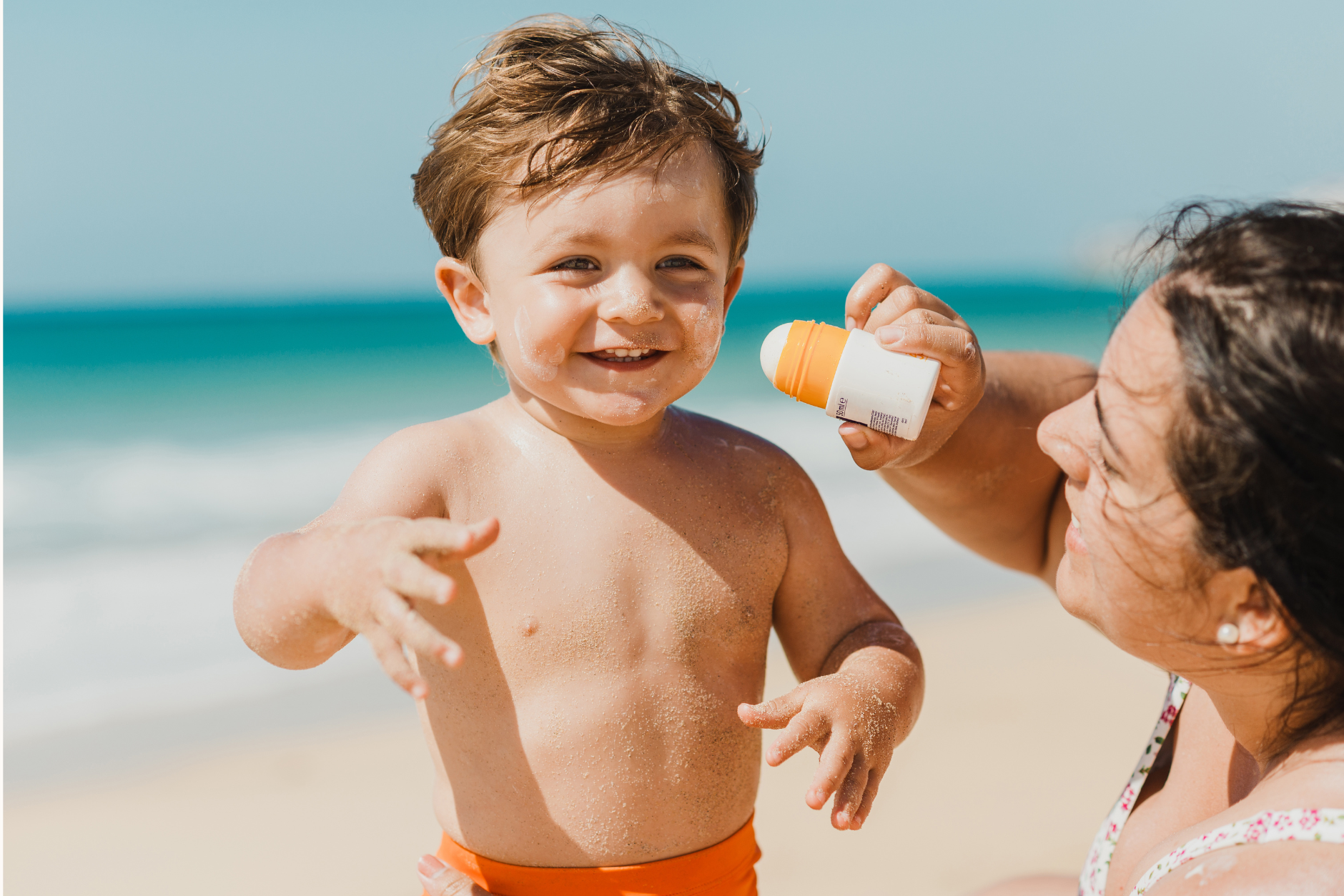
Rollers, brushes and other sunscreen applicators can make application easier for some families, especially with toddlers who dislike having sunscreen rubbed onto their skin.
The tool itself does not determine how much protection your child receives. The amount and evenness of the sunscreen still matter.
After using an applicator, check that the skin is fully covered and blend with your hands if needed.
Can You Use Sunscreen and Bug Repellent Together?
Yes.
Health Canada says sunscreen and insect repellent can be used together.
Apply sunscreen first, then insect repellent.
Follow the directions for each product separately, including how frequently each one can be reapplied.
If you’re also deciding which insect repellents can be used at different ages, our Bug Repellent for Babies & Toddlers: What Health Canada Recommends and What You Can Choose guide walks through those recommendations in detail.
Remember: Sunscreen Does Not Protect Children From Heat
This distinction is really important.
Sunscreen protects skin from ultraviolet radiation, but it does not prevent overheating, dehydration or heat illness.
On hot days, children still need:
Shade
Breaks from the heat
Lightweight clothing
Age-appropriate fluids
Extra attention to how they are feeling and behaving
Our Heat Stroke at Every Age: How to Prevent, Spot + Respond When It’s Too Hot guide goes deeper into signs of overheating and what caregivers can do when temperatures climb.
What About “Natural” or Homemade Sunscreen?
The word “natural” does not automatically tell us whether a sunscreen provides reliable UV protection.
What matters is whether the product has been properly tested and authorized for sale in Canada.
Health Canada specifically advises Canadians not to use homemade sunscreen. Homemade formulas have not gone through the testing required to confirm their SPF or how consistently they protect against UV radiation.
If you prefer a mineral, fragrance-free or simpler formulation, there are authorized products that offer those options without having to rely on a DIY sunscreen recipe.
What if My Child’s Skin Reacts to Sunscreen?
Skin reactions to sunscreen are uncommon, but sensitivities can happen.
If you are trying a new sunscreen, you may want to test it on a small area of skin first.
If your child develops irritation, itching or a rash, stop using that product. Another formulation or type of sunscreen may work better.
If the reaction is significant, persists or you are unsure what your child should use, check with your healthcare provider or pharmacist.
The Goal Isn’t the “Perfect” Sunscreen
There are a lot of sunscreen opinions online, and it can make a fairly simple decision feel much harder than it needs to be.
You don’t need the most expensive bottle or the product with the longest list of claims on the front.
Look for:
Broad-spectrum. SPF 30+. DIN or NPN. Appropriate for your child’s age.
Then combine sunscreen with shade, clothing, hats and smart timing when you can.
The sunscreen that protects your child is the one you can comfortably use, apply well and remember to reapply.
That’s what matters.
Want Product Suggestions?
We’ve gathered some of our favourite family-friendly summer products in one place.
When choosing sunscreen, always check the current product label, age recommendations, DIN or NPN, expiry date and application directions before use.
Explore Our Family-Safe Summer Picks
Continue Learning
Continue building your family’s safety toolkit with these trusted resources from Bump + Baby Matters.
Infant & Child CPR + Choking Classes
Heat Stroke at Every Age: How to Prevent, Spot + Respond When It’s Too Hot
Bug Repellent for Babies & Toddlers: What Health Canada Recommends and What You Can Choose
Swimsuit Color Safety: Why Bright Colours May Matter in the Water
Keeping Kids Cool In The Car This Summer: Simple Tips & Safe Cooling Tools for Families
Have a question? We’re always happy to help. Send us a message on Instagram.