
When we think about water safety, most of us focus on the big things.
Swimming skills. Close supervision. Life jackets and floatation devices when needed.
But there’s one smaller detail many of us may not think about right away: swimsuit color.
And once we notice it, it’s one of those things that can be hard to unsee.
Why swimsuit color may matter
Water changes how things look.
Light reflects differently, colors shift, and visibility can drop faster than we expect, even in a clear pool.
In lakes, rivers, and oceans, visibility may change even more quickly because of darker water, movement, shadows, and murkiness. A swimsuit that looks bright on land may not look the same once it’s in the water. That can matter when we’re trying to keep eyes on our littles.
Which swimsuit colors are usually easiest to see?
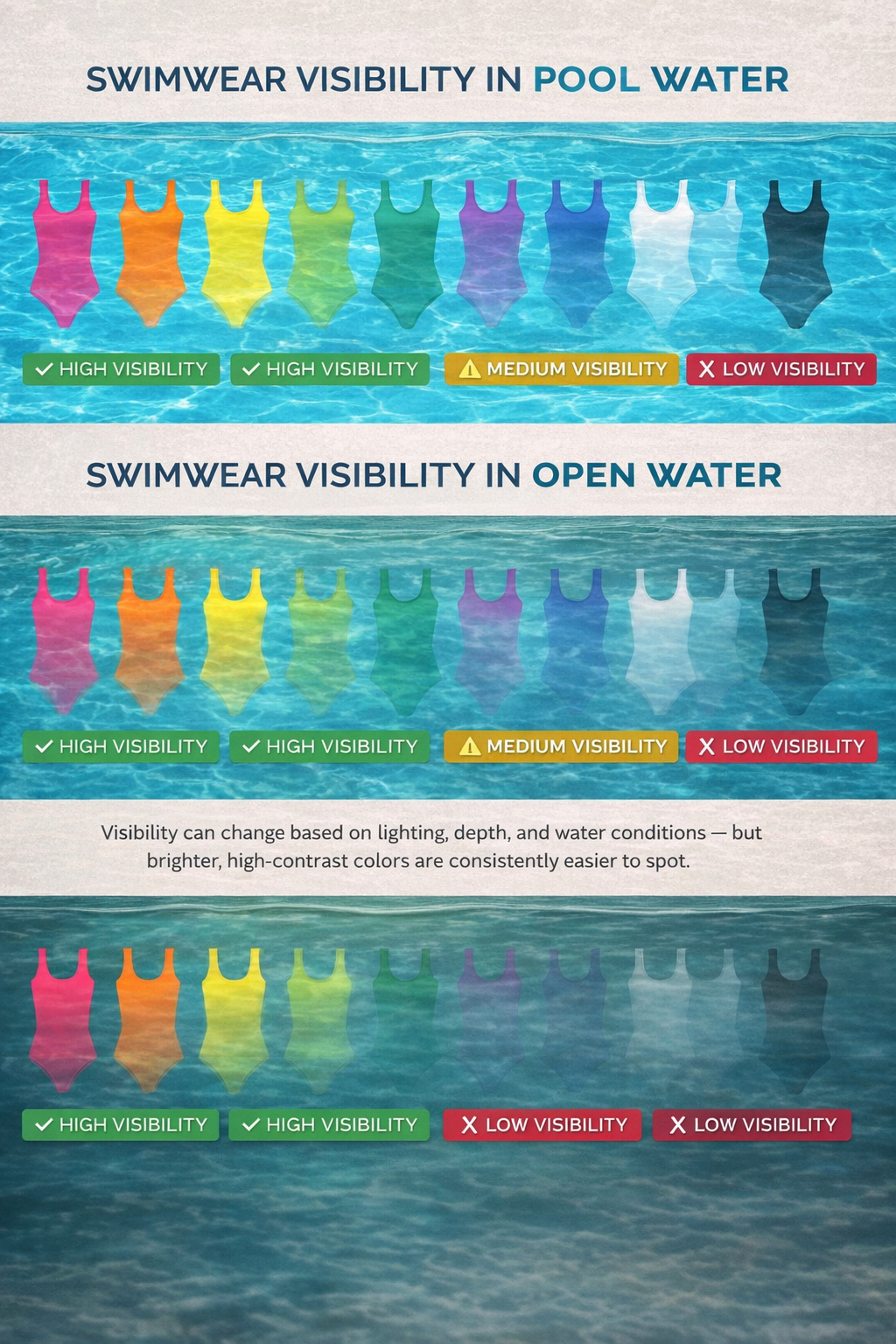
In commonly cited water visibility tests, the colors that tend to stand out best are:
neon orange
neon yellow
neon green
bright pink
These shades usually create stronger contrast against pool water and darker natural water.
Colors that may be harder to see
Some colors may become harder to spot once they’re underwater or viewed from farther away, including:
blue
white
grey
black
Blues can blend into the water. White may reflect light or glare. Darker shades can disappear into shadows or look like leaves or debris, especially in natural water.
Pool water and open water are not the same
In pools:
We may have clearer water and better lighting, so bright colors often stand out well. But glare, reflections, and pool-bottom color can still affect what we see.
In lakes or oceans:
Water is often darker, deeper-looking, or murkier. Visibility may drop faster, which is why high-contrast neon shades can be especially helpful there.
Age and stage: what this can look like
Babies (0–12 months)
Babies are usually held or within arm’s reach, but bright swimwear may still support visibility during water play.
Toddlers (1–3 years)
Toddlers move quickly and unpredictably. A brighter swimsuit may help us spot them faster in busy pool or beach settings.
Preschool and early school age (3–6+ years)
As kids become more confident and independent in the water, bright swimwear may support visibility from a greater distance.
A gentle reminder
Swimsuit color can support visibility.
But it’s only one piece of water safety.
What matters most is still:
active, undistracted supervision
staying within arm’s reach for younger children
reducing distractions like phones and side conversations
building water skills and confidence over time
Because even strong swimmers may still need help. Akron Children’s notes that bright colors can help, but they are never a substitute for close supervision.
Small choices can still matter
This is not about getting everything perfect.
It’s just about noticing one more small thing that may support safety.
If we’re choosing swimwear anyway, picking a brighter, easier-to-see color may be one simple shift that helps us keep track of our littles a little faster.
And sometimes, small choices like that are worth making. You’ve got this!
Continue Learning
Continue building your family’s safety toolkit with these trusted resources from Bump + Baby Matters.
Infant & Child CPR + Choking Classes
Have a question? We're always happy to help. Send us a message on Instagram.