
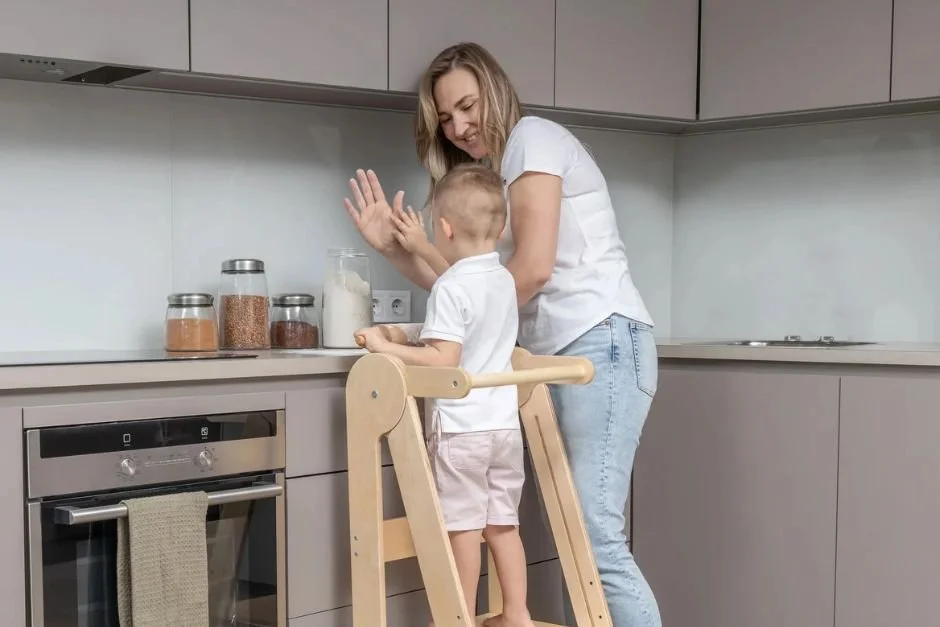
When we’re in the kitchen with our littles, it can feel magical — and a bit hectic! Learning towers help us bring curious kids up to counter height so they can be part of what we’re doing. They can encourage confidence, help develop new skills, and turn everyday routines into connection moments.
Let’s walk through what makes learning towers a great addition to our homes, how to choose one, and how to keep our environments safe for all ages and stages.
Why Learning Towers Are Great for Development
Learning towers help create opportunities for kids to:
• Build motor skills: Climbing up and down supports balance, coordination, and strength.
• Practice independence: Standing at counter level lets littles participate — from rinsing produce to stirring batter.
• Boost confidence: Being included in “grown-up” tasks feels empowering.
• Enhance language and cognitive skills: Talking through steps and describing actions builds vocabulary and problem-solving.
• Increase focus and patience: Waiting their turn or following kitchen rhythms helps self-regulation.
Rather than just watching from afar, kids can be engaged — which supports both emotional and physical development.
What to Look for in a Learning Tower
Not all towers are the same. When we’re choosing one, these features can help make the experience smoother and more secure:
• Sturdy base — Wider footprints resist tipping.
• Non-slip steps and platform — Textured surfaces help little feet stay planted.
• Safety rails or enclosed sides — These give extra support at the top.
• Adjustable height — So the tower grows with the child.
• Smooth finishes with no sharp edges — Reduces scrapes and snags.
• Optional removable tray or gate — Helps with younger toddlers transitioning in safely.
Features like foldability can be great for small spaces, but we want to make sure locks are secure and stable before daily use.
Understanding Potential Risks (Without Fear!)
We know that no matter how great a tool is, there are a few things to be aware of so everyone stays safe:
• Falls — Getting in and out can be tricky at first.
• Hot surfaces or steam — Stoves, kettles, and ovens can be hazards.
• Sharp or heavy objects — Knives, graters, or cast-iron pans close to reach.
• Slips — Socks on smooth floors can make climbing wobbly.
• Pinching — Fingers can get caught in moving parts if towers fold or adjust.
These aren’t deal-breakers — just chances for us to set up thoughtfully and stay near.
Safe Practices By Age & Development
A child’s age gives us a helpful guideline, but development and temperament matter most. Here’s how we can match expectations and support at each stage:
Around 12–18 months
• Often loving to climb with help.
• Use the tower for observation, pouring water, rinsing soft produce.
• We can assist with climbing and remind little feet to go slow.
Around 18–24 months
• Motor skills improving, but balance may still be playful!
• Great for simple kitchen helpers like adding berries to a bowl.
• Set clear, gentle boundaries like “both feet stay on the platform.”
Around 2–3 years
• Becoming more coordinated and able to follow steps.
• Can practice measuring ingredients, gentle stirring, sorting.
• Begin teaching simple safety phrases like “we don’t touch hot things.”
3+ years
• Increasing independence and listening skills.
• Ready for more complex tasks like cracking eggs with guidance or using toddler-safe tools.
• Can help with cleanup steps like wiping counters or sorting recyclables.
Remember, every child grows at their own pace — tuning into their cues and adjusting expectations helps keep the experience positive.
Setting Up a Safe Space
Creating the right environment can make learning tower moments safer and more fun:
Placement
• Set the tower on a flat, non-slip floor.
• Keep it away from hot appliances and heavy counter edges.
• If possible, place near a wall or solid counter edge for extra stability.
Heat, Sharp Items & Edges
• Turn pot handles inward and move knives or graters well out of reach.
• Choose cool-prep tasks when you want uninterrupted engagement.
Foot Grip & Flooring
• Bare feet often grip best.
• If your floor is slippery, consider a small rug or non-slip mat under the tower.
Supervision & Shared Scripts
• We don’t need to hover, but staying nearby gives kids confidence and safety.
• Simple shared language helps, like “Hands stay in the tower until we’re done climbing” or “Hot things are only for grown-ups.
Learning towers can open doors to connection, independence, and joyful participation. By choosing the right one, understanding risks without fear, and adapting our environment to our child’s stage, we create space for both safety and growth.
We’re all learning together. These moments in the kitchen can become some of the best building blocks for confidence, curiosity, and cooperation.
Continue Learning
Continue building your family’s safety toolkit with these trusted resources from Bump + Baby Matters.
Infant & Child CPR + Choking Classes
Build practical emergency-response skills in a warm, supportive learning environment.
Browse More Parent Safety Articles
Explore evidence-based information about choking prevention, babyproofing, water safety, emergency preparedness and everyday family safety.
Canada’s Ultimate Parent Giveaway
Discover thoughtfully selected products and resources for growing Canadian families.
Have a question? We're always happy to help. Send us a message on Instagram.