
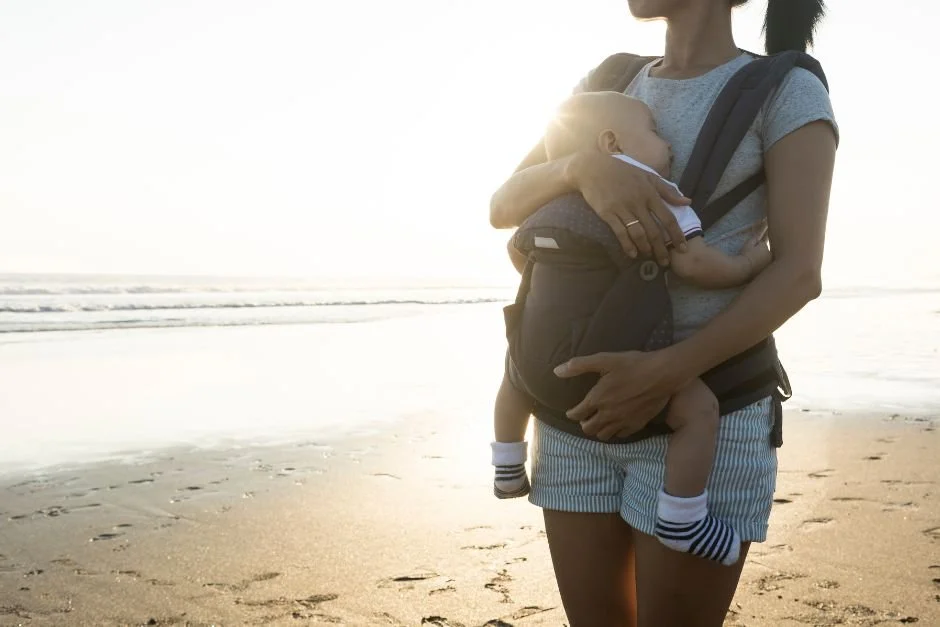
There’s something truly special about wearing your baby — the closeness, the calming effect, and the ability to move through your day while staying connected. But not all baby carriers are created equal. The right carrier supports your baby’s development, protects their hips, and keeps both of you comfortable and safe.
Let’s walk through what to look for, what to avoid, and when babywearing might not be the best choice.
Support Healthy Hips: Why the “M Position” Matters
According to the International Hip Dysplasia Institute, how we carry our babies early on can directly impact their hip development. That’s why experts recommend the “M position” — where baby’s knees are higher than their bum, thighs are spread, and hips are bent and supported from knee to knee. This encourages healthy alignment and reduces pressure on developing joints.
Carriers that let a baby’s legs dangle straight down — especially in babies with a higher risk of hip dysplasia — can place unnecessary strain on their hips. What to look for: a wide, deep seat that supports baby in a natural, seated “M” shape — not one where they hang with unsupported legs.
Types of Baby Carriers — and What to Know
Wraps and slings
Soft and cozy — ideal for the newborn stage (0 to 3 months). Some styles take a bit of practice. Always position baby upright, with their face visible and chin lifted.
Soft structured (buckle) carriers
Easy to use and often adjustable as your baby grows. Most are suitable from around 4 to 6 months, once baby has strong head and neck control — or earlier with an infant insert, depending on the brand.
Hybrids and mei tais
A blend of wrap softness with added structure. These can be used from newborn to toddler, depending on your baby’s size and the carrier's design.
Framed hiking carriers
These structured carriers are made for outdoor use and longer outings. Health Canada recommends only using backpack-style hiking carriers once your baby has full head and trunk control and can sit independently — typically around 6 to 9 months and up. Always check the product’s specific age and weight guidelines before use.
What to Look For in a Baby Carrier
A wide, ergonomic seat that supports baby’s thighs and hips
Adjustable straps and waistband for your comfort
Breathable, baby-safe fabrics
Multiple carry positions for different stages
Clear visibility of baby’s face at all times
“Hip-healthy” certification from organizations like the IHDI, if available
Try different options if you can — what feels comfortable for one caregiver may not feel good for another.
When to Use a Carrier — and When Not To
Babywearing can be a beautiful part of everyday life — offering closeness, hands-free bonding, and comfort. But there are times when it isn’t the safest option.
Avoid babywearing:
While cooking or near hot surfaces or sharp objects
When you’re feeling drowsy, dizzy, or unsteady
During activities that involve fast movement or a risk of falling (like jogging or biking)
If baby is slumping, too low, or poorly positioned
Before each use, check for proper fit and positioning. A baby should always be:
Visible at all times
Close enough to kiss
Kept upright with a supported back
Positioned with their chin off their chest and airway clear
Also inspect your carrier for wear and tear — look for ripped seams, missing buckles, or broken zippers before using.
The safest carrier is one that fits both your baby and your body — and is used with awareness and intention. Positioning matters more than product claims. By following safety guidelines and tuning into your baby’s cues, babywearing can be both joyful and secure.
Learn More & Connect
Have you entered our latest giveaway? Enter HERE!
Check out our Infant & Child CPR & Choking First Aid Class HERE!
Have questions? Message us on Instagram!