
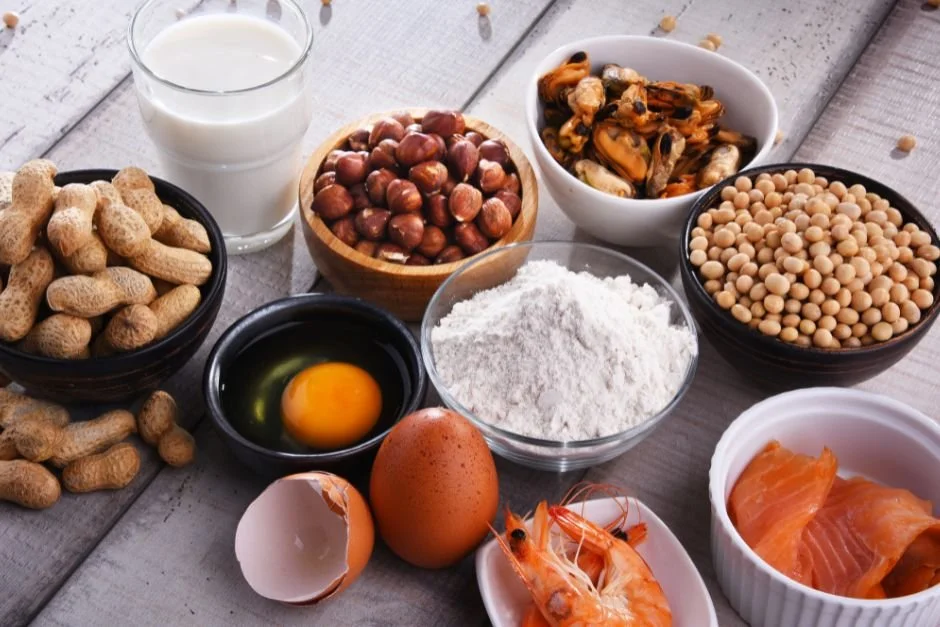
Starting solids can bring up a lot of feelings — excitement, curiosity, and sometimes a bit of nervous energy. One of the biggest concerns many caregivers share is how (and when) to introduce allergens like peanuts, eggs, and dairy. The good news? You don’t have to wait!
Experts now recommend introducing common allergenic foods around 6 months of age, as part of your baby’s regular diet, once they’re developmentally ready. Let’s break down how that can look in real life!
Why Introduce Allergens Early?
For years, families were told to delay introducing allergens. But newer research has shown that delaying allergenic foods can actually increase the risk of developing food allergies.
Now, Canadian guidelines encourage early, intentional introduction of allergenic foods — especially peanuts and eggs — around 6 months of age (but not before 4 months), to help reduce the risk of developing allergies later. This is true for both high-risk and low-risk babies — including those with eczema or a family history of allergies — unless otherwise advised by your healthcare provider.
Start With Readiness — Not Just the Calendar
Before offering allergens (or any solids), your baby should:
Sit upright with little or no support
Show interest in food
Be able to bring food to their mouth
Have good head and neck control
If those signs are in place, you’re ready to begin — and allergenic foods can be included early on, alongside fruits, veggies, and other starter options.
Top Allergenic Foods and How to Offer Them Safely
Here’s how to include the most common allergens in a way that’s baby-led weaning–friendly and age-appropriate:
Peanuts
Use smooth peanut butter, thinned with warm water, breastmilk, or formula. Offer it spread thinly on toast strips, mixed into warm cereal, or stirred into mashed banana or yogurt. Avoid: Whole nuts, chunky nut butters, large globs or putting it on bread that’s not toasted due to choking risks.
Eggs
Serve fully cooked scrambled eggs, mashed hard-boiled egg, or soft baby pancakes made with egg. Avoid: Raw or undercooked eggs.
Cow’s Milk (in food only)
While babies shouldn’t drink cow’s milk as a main beverage before 12 months, you can include yogurt, cheese, and milk in cooking or baking.
Wheat
Offer soft bread, toast strips, cooked pasta, or pancakes made with wheat flour. Watch for: Soft, manageable textures your baby can squish with their gums.
Soy
Try tofu strips, soy-based yogurt, or mashed edamame (skin removed). Soy is often introduced naturally in many common foods.
Fish
Offer well-cooked, flaked fish like salmon or cod. Make sure all bones are removed and texture is soft and easy to manage.
Shellfish
Shrimp and crab can be finely chopped and offered once your baby is comfortable with a wider range of textures. Serve cooked and cool.
Tree Nuts
Like peanuts, use tree nut butters (like almond or cashew) thinned and spread onto soft foods or mixed into meals. Avoid: Whole or chopped nuts due to choking risk.
How to Introduce Allergens Safely
Start with one new allergen at a time, ideally in the morning or early afternoon
Offer a small amount, and observe your baby for the next 1–2 hours
Watch for signs of reaction, such as hives, facial swelling, vomiting, or coughing. Serious reactions are rare, but always seek immediate medical help if your baby has trouble breathing.
If your baby tolerates the food, continue offering it regularly (about once a week) to help maintain tolerance.
What If You’re Feeling Nervous?
That’s completely understandable. It’s okay to go slowly and take steps that help you feel confident:
Start with lower-risk allergens first
Introduce foods at home, when another adult is nearby
Have a phone and contact information ready, just in case
Talk to your healthcare provider if your baby has eczema or other concerns
This is about giving your baby a gentle, steady introduction to a wide variety of foods, including the ones that used to be delayed. So take a deep breath. Sit with your baby. Offer them something new. Watch them explore — and know that every messy, curious bite is part of a powerful process!
Want Product Suggestions?
Check out our handpicked collection of meal time essentials!
→ Mealtime Essentials | Feeding Essentials for Babies & Toddlers
Learn More & Connect
Check out our Starting Solids Class HERE!
Check out our Infant & Child CPR & Choking First Aid Class HERE!
Have questions? Message us on Instagram!