
When we hear about choking, many of us imagine rare emergencies or public places. But the reality is much closer to home. Most choking incidents happen in the home, often during everyday moments like meals, snacks, and early feeding experiences.
That can sound scary — but it can also be empowering. Because when we understand where choking most often happens, we can focus on practical prevention and feel more confident knowing what to do if it occurs.
This guide walks through choking risks during starting solids, infancy, and early childhood, and how Infant & Child CPR + choking education supports caregivers in real life.
Why Choking Most Often Happens at Home
Home is where:
We introduce solids and new textures
Littles eat most meals and snacks
Daily routines move quickly
Caregivers are multitasking and supporting a lot at once
Choking rarely happens during “big” moments. It usually happens during ordinary ones — which is why awareness and preparation matter.
Starting Solids & Choking Safety (Around 6–12 Months)
Starting solids is a big milestone, and it’s normal for it to feel a little intimidating. Gagging is common and developmentally appropriate — choking is different, and knowing the difference helps us stay calm and responsive.
Supportive practices during this stage include:
Sitting baby upright for all feeds
Offering soft foods that squish easily between fingers
Serving foods in safe shapes (long strips rather than rounds)
Staying close and present during meals
Examples of lower-risk foods:
Soft avocado slices, steamed veggie sticks, ripe banana strips
Starting solids isn’t something we need to “master” — it’s something we learn together.
Infant Choking Risks (0–12 Months)
Infants are at risk for choking beyond solids, including milk feeds and small objects.
Helpful reminders:
Watch feeding cues and pace feeds
Avoid propped bottles
Keep small objects out of reach
Understand infant choking first aid
Infant choking looks different from toddler choking, which is why age-specific CPR and choking skills are important.
Toddler Choking Risks (1–3 Years)
Toddlers are one of the highest-risk age groups for choking. Curiosity is high, movement is constant, and chewing skills are still developing.
Habits that can help reduce risk:
Sitting to eat, even for snacks
Cutting foods appropriately for age
Separating play and eating
Supervising meals without rushing
Foods that need modification:
Grapes (quartered lengthwise), sausages, apples, hard candies, popcorn
Preschoolers (3–5 Years)
As children grow, confidence often increases faster than skill.
What still supports safety:
Calm, seated meals
Continued food preparation for higher-risk foods
Talking about chewing slowly
Gentle reminders rather than strict rules
Why Infant & Child CPR + Choking Education Matters
Even with prevention, choking can still happen. Knowing what to do can make a meaningful difference.
Learning Infant & Child CPR and choking first aid:
Helps us respond quickly and calmly
Reduces panic in emergencies
Builds confidence across ages and stages
Supports caregivers, grandparents, and anyone caring for children
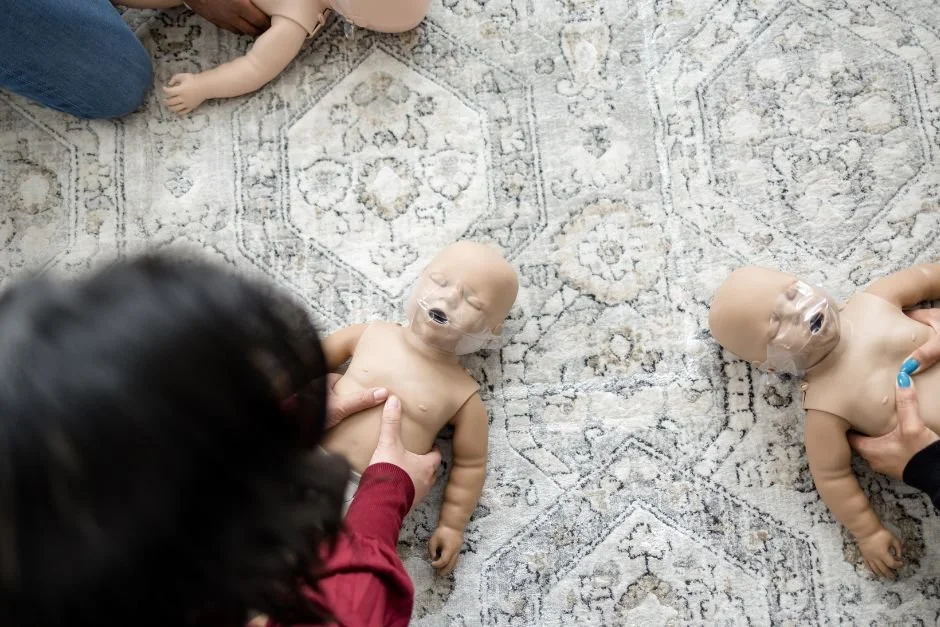
Our Infant & Child CPR + Choking Course is designed for real life — covering choking scenarios during starting solids, infancy, and early childhood in a way that’s calm, clear, and supportive.
Preparation isn’t about expecting emergencies. It’s about feeling capable if one happens.
A Gentle Reminder
We’re all doing the best we can with the information and capacity we have. Safety isn’t about fear or perfection — it’s about learning together and making small changes that add up over time.
Continue Learning
Continue building your family’s safety toolkit with these trusted resources from Bump + Baby Matters.
Infant & Child CPR + Choking Classes
Have a question? We're always happy to help. Send us a message on Instagram.