
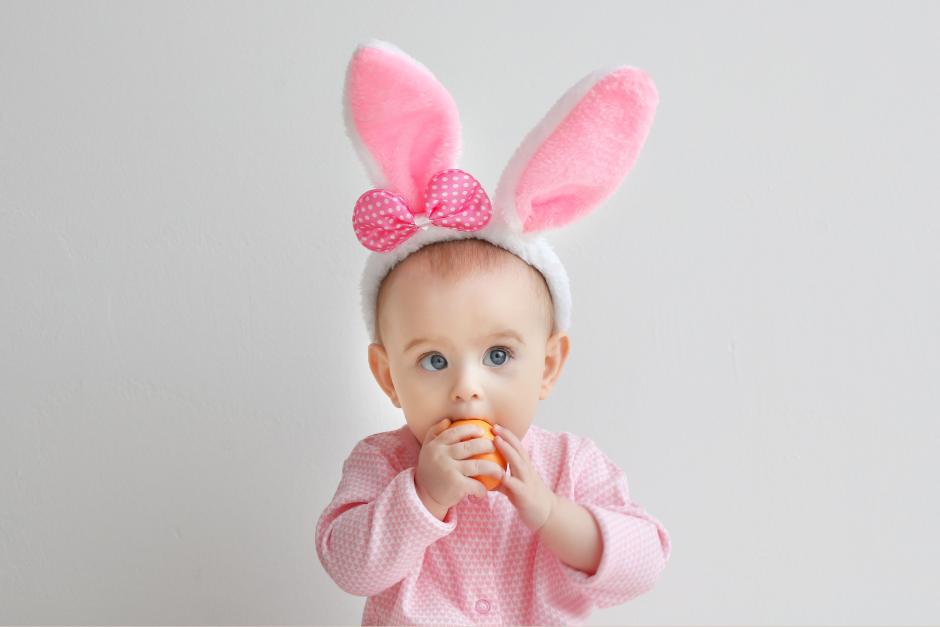
We know how exciting Easter can feel for littles — egg hunts, baskets, treats, and surprises everywhere. It’s a season full of colour and celebration, and it’s natural to want children to fully enjoy it.
At the same time, many common Easter foods and basket items are small, round, hard, or sticky — which can increase choking risk for babies, toddlers, and young children.
The goal isn’t to take away the fun. It’s to notice a few common hazards and make thoughtful swaps that keep Easter feeling festive and safer for everyone.
Candy-Coated Chocolate Eggs
Candy-coated chocolate eggs (especially mini eggs)
Smooth, round chocolate pieces that become slippery once warm or wet
These treats are round and firm, which makes them harder to bite through. If swallowed whole, they can block the airway — especially for children under 4 who are still developing chewing and swallowing skills.
Jelly Beans & Hard Candies
Jelly beans
Hard candies
Any small, firm candy that can be swallowed whole
These candies are difficult to chew properly and easy to accidentally swallow whole, which makes them a common choking risk for young children.
Marshmallows
Marshmallow chicks or bunnies
Large marshmallows used in treats or hot chocolate
Marshmallows are soft and sticky, which can cause them to mold to the throat if they get stuck — especially for children under 5.
Tiny Toys & Trinkets
Small toys hidden inside eggs
Mini figurines or trinkets
Decorative pieces small enough to fit in a mouth
These items aren’t food, but during excitement and play, they’re often explored with mouths — especially by babies and toddlers.
Whole Nuts
Whole peanuts or almonds
Chocolate-covered nuts
Snack mixes with whole nuts
Whole nuts are hard and don’t break down easily when chewed. They’re not recommended for children under 5 due to choking risk.
Safer Easter Treat Swaps
Infants (6–12 months): Mashed banana or avocado (optionally with a small sprinkle of cocoa powder for flavour exposure)
Toddlers (1–3 years): Soft chocolate-style oat or date bites cut into strips
Preschoolers (3–5 years): Melted chocolate drizzled thinly over soft fruit
Early school-age (5+ years): Soft chocolate bars without nuts or hard fillings (such as Aero, Cadbury Dairy Milk, Hershey’s Milk Chocolate, Kinder, Milky Way, Coffee Crisp, or Kit Kat)
Non-Edible Easter Basket & Activity Ideas (By Age)
Not everything in an Easter basket has to be edible. Many families find that non-food items keep the excitement going longer — and they can also support safer play during busy, high-energy celebrations.
Infants (0–12 months)
At this stage, baskets are more about sensory exploration than “stuff.”
Bubbles (for caregivers to blow while babies watch)
Soft bath toys
Fabric or plush bunny ear headbands for supervised play
High-contrast or textured colouring-style board books
Toddlers (1–3 years)
Toddlers love hands-on play and repetition.
Bubbles
Bath toys
Chunky crayons or water-reveal colouring books
Play-Doh (with supervision)
Soft bunny ear headbands
Preschoolers (3–5 years)
Preschoolers enjoy creativity and imaginative play.
Colouring books or water-reveal books
Play-Doh
Sidewalk chalk
Bunny ear headbands for dress-up
Simple kids’ plastic gardening sets
Early School-Age (5+ years)
Older children often enjoy items they can use again and again.
Sidewalk chalk
Kids’ plastic gardening sets
Sunglasses
Colouring books or activity books
Bath toys or outdoor water toys
A Gentle Reminder About Eating & Movement
Easter activities often involve lots of movement — running, laughing, bending down, and excitement during egg hunts.
We can help lower choking risk by encouraging children to:
Collect treats first
Sit down to eat later
Chewing while running or playing can make it harder to manage food safely, especially for younger children. Separating play from eating is one small habit that can make a meaningful difference.
Quick Safety Reminders
If it can fit inside a toilet paper roll, it’s too small for children under 4
Sitting down while eating lowers choking risk
Running, laughing, or playing while chewing increases risk
Foods that are round, hard, sticky, or firm are best avoided until strong chewing skills develop (often after age 4–5)
And most importantly, knowing what to do if a child chokes can make a big difference. Infant and Child CPR and choking response education can help caregivers feel prepared and confident during everyday moments — including holidays.
Learn More & Connect
Check out our Infant & Child CPR & Choking First Aid Class HERE!
Have questions? Message us on Instagram!